
Pre-Winter Sale Limited Time 75% Discount Offer - Ends in 0d 00h 00m 00s - Coupon code = simple75
Pass the Appian Senior Developer ACD201 Questions and answers with Dumpstech
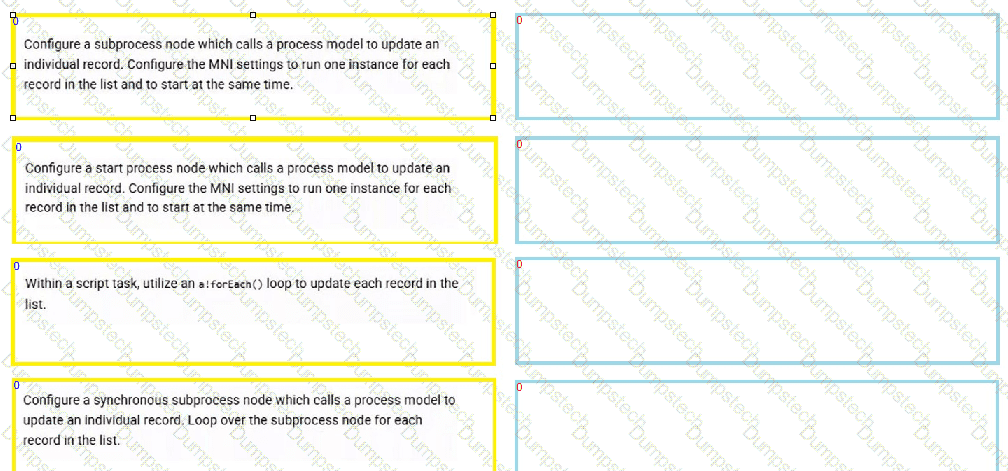
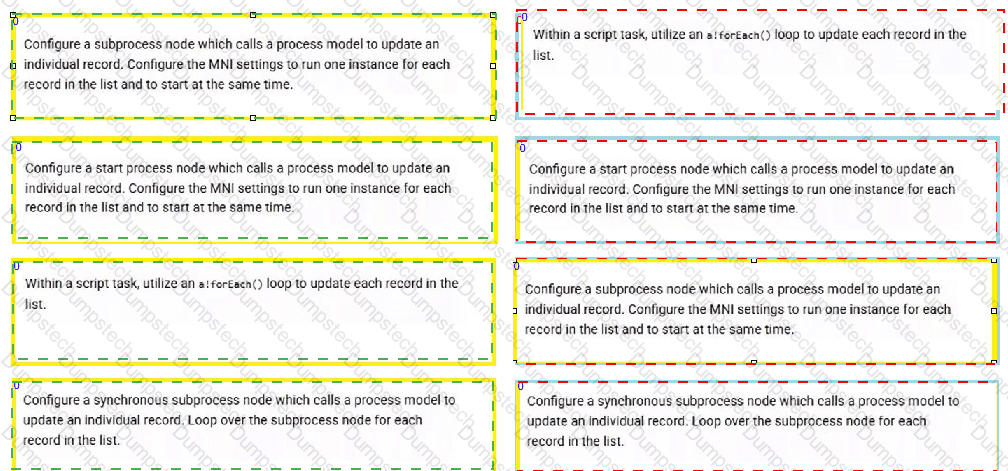
You're creating a process to update specific fields in a list of records and you save the updated records to the database.
You're given the following performance considerations:
 Execution time
 Process instance memory usage
 Process execution engine load balancing
Based on these performance metrics, rank the options from best to worst.
Note: To answer, move all steps from the Options list to the Answer List area and arrange them in the correct ranking order (best at the top, and worst at the bottom).
What are two advantages of database normalization? (Choose two.)
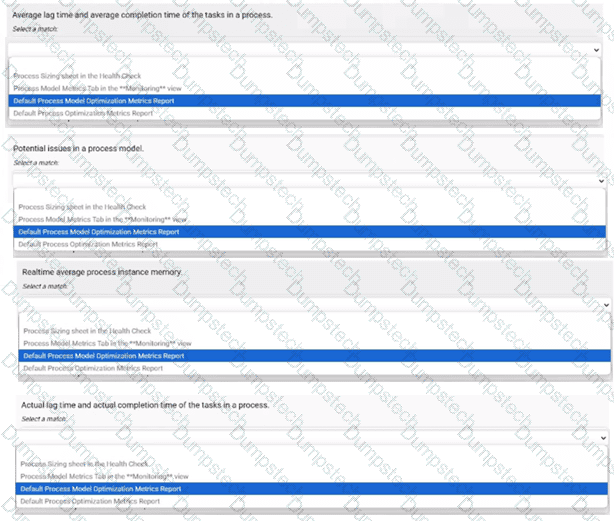
You are reviewing application performance-related issues reported by users.
As part of this activity, you need to check interface performance, expression rules performance, and process model performance.
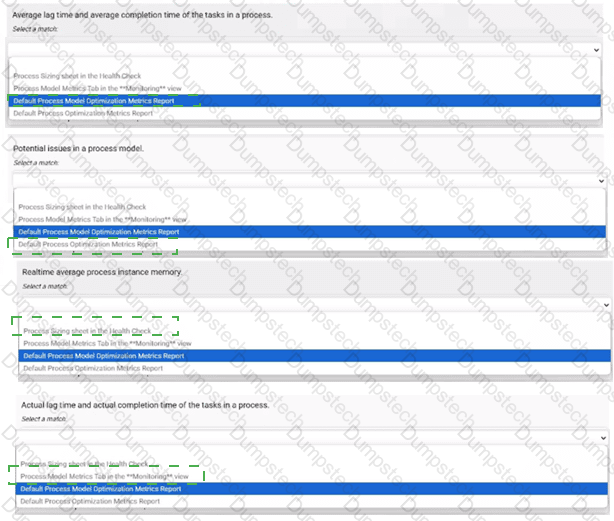
Match each statement to the option that best describes where you can view this information.
Note: Each object or view will be used once. To change your responses, you may deselect your response by clicking the blank space at the top of the selection list
You need to add test cases to an existing expression rule in the system. Expression rule gives a complex data type value as an output result.
The test case should pass only when a field in the resultant data matches with a specific value mentioned.
How should you configure the test case assertion?
You need to relate two entities, Employee and Skill, in the data structure. You want to adhere to Appian best practices.
Employees can have multiple skills, and a single skill can relate to multiple employees.
What type of relationship do these entities represent, and what is the minimum number of tables required to implement the design?
 Employee table
 Skill table
 EmployeeSkill (junction/association) table - contains foreign keys referencing both Employee and Skill to manage the many-to-many relationship.
You need to implement a Gender dropdown, where the choice labels may need to be altered in the future. The transactional database tables rely on this data for reporting, so the data must be accurate.
What is the recommended action?
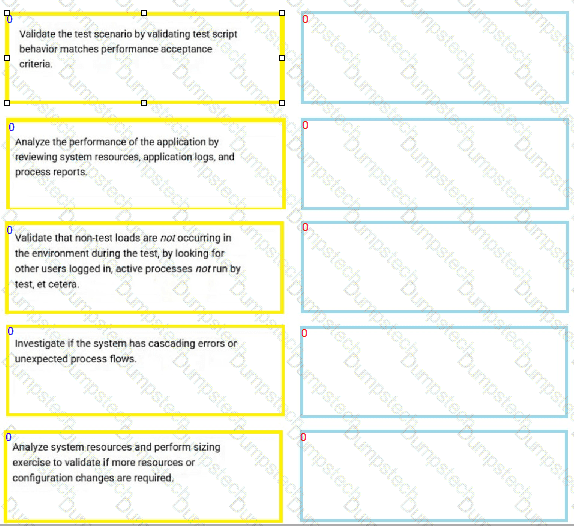
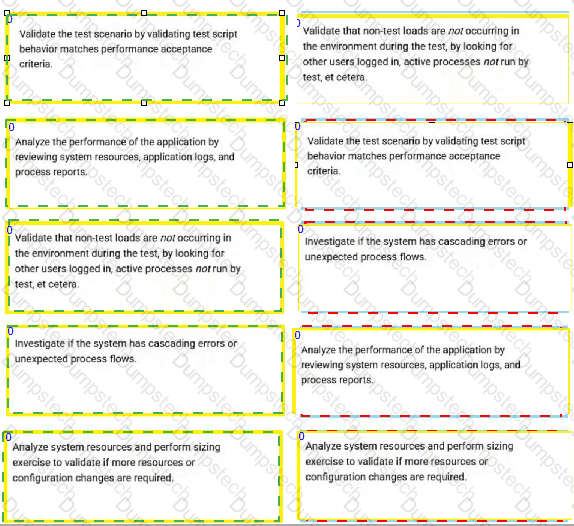
You're executing a performance test of the client's application. You notice that server-side resources are at high-to-critical operating levels.
What should you do to troubleshoot this issue?
Note: To answer, move all steps from the Options list to the Answer List area and arrange them in the correct order.
Which section of the Interface Performance View explains the contribution towards the overall evaluation time of the current function, rule, or parameter?
What are three locations to call an Integration that changes the source data? (Choose three.)
You run a report on different employee transactions by using a View.
You encounter the following error: "a!queryEntity: An error occurred while retrieving the data."
What is the most likely root cause of this error?
