Pre-Winter Sale Limited Time 75% Discount Offer - Ends in 0d 00h 00m 00s - Coupon code = simple75

Pass the Fortinet Network Security Expert NSEI_OTS_AR-7.6 Questions and answers with Dumpstech

Exam NSEI_OTS_AR-7.6 Premium Access

View all detail and faqs for the NSEI_OTS_AR-7.6 exam

Practice at least 50% of the questions to maximize your chances of passing.
Viewing page 2 out of 2 pages
Viewing questions 11-20 out of questions
Questions # 11:

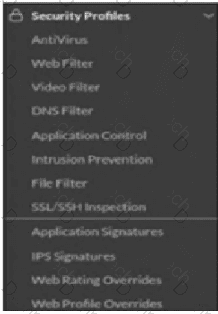
Refer to the exhibit.

Question # 11

The OT devices behind the ruggedized FortiGate have vulnerabilities and you want to apply a virtual patching profile in the firewall policy. Why is Virtual Patching not available in the Security Profiles section? (Choose one answer)

Options:

A.

You must enable Virtual Patching in the Feature Visibility section.

B.

You must have a ruggedized FortiGate allowing the virtual patching feature.

C.

You must enable OT signatures.

D.

You must have a valid OT security service license.

Questions # 12:

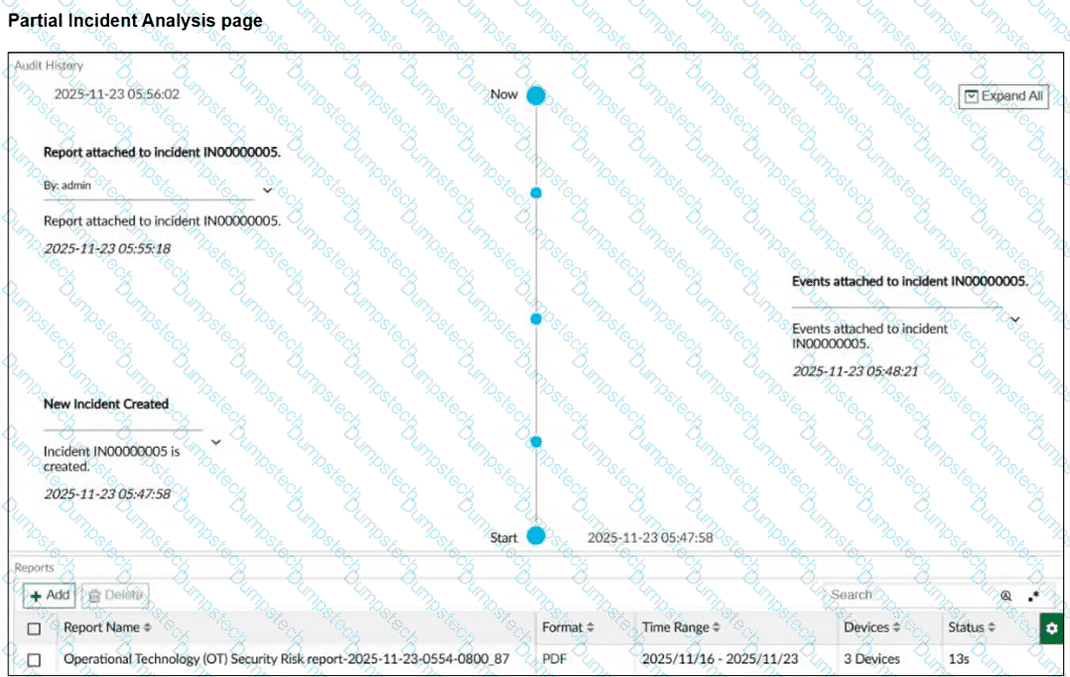
Refer to the exhibit.

Question # 12

A partial Incident Analysis page is shown. How was the 360-Degree Security Review OT report attached to the incident? (Choose one answer)

Options:

A.

Automatically by a stitch

B.

Automatically by an event handler

C.

Automatically by a playbook

D.

Manually by an administrator

Questions # 13:

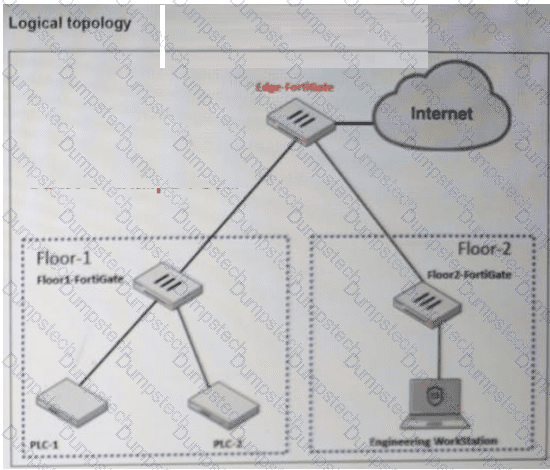
Refer to the exhibit.

Question # 13

A partial OT network is shown. You have encountered many disconnections in the links and want to improve the availability of this network. Which action can you perform? (Choose one answer)

Options:

A.

You can implement HA clusters.

B.

You can implement SD-WAN at Floor-1-FortiGate and Floor-2-FortiGate.

C.

You can implement parallel redundancy protocol.

D.

You can implement VDOMs in Edge-FortiGate.

Questions # 14:

Which industrial protocol does not support VLANs? (Choose one answer)

Options:

A.

[Not clearly visible in the exhibit]

B.

Ethernet over industrial protocol

C.

EtherCAT

D.

Modbus over TCP

Questions # 15:

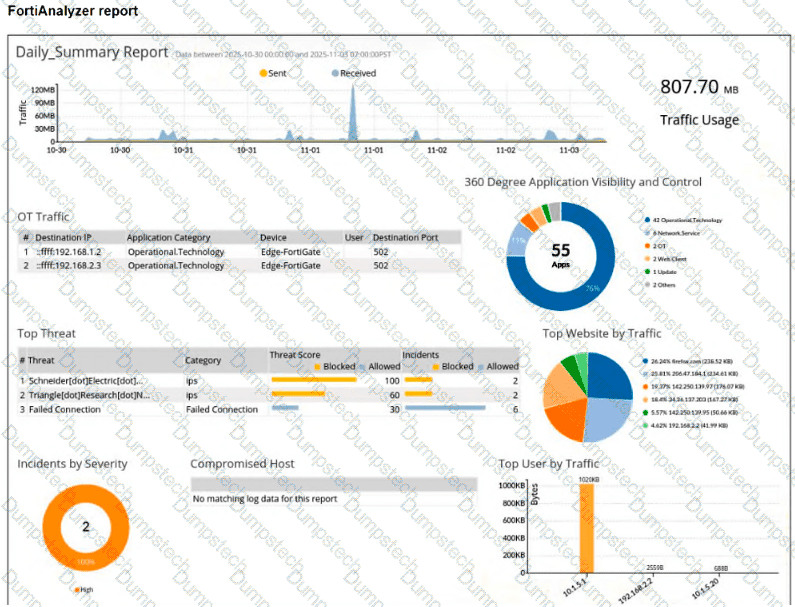
Refer to the exhibit.

Question # 15

A FortiAnalyzer report is shown.

You must extract relevant information provided by the report regarding your OT network.

Which two statements are correct? (Choose two.)

Options:

A.

The report covers the last day.

B.

The attacks are blocked.

C.

Modbus traffic is reported.

D.

The targeted IP address of the attacks is 10.1.5.1.

Questions # 16:

In the Purdue model, at which level are physical assets like the Industrial Internet of Things (IIoT) placed? (Choose one answer)

Options:

A.

At Level 5 only

B.

At Level 1 only

C.

Above Level 4

D.

Below Level 3.5

Questions # 17:

In your OT environment, you want to detect the devices passively. Which two methods must you implement? (Choose two answers)

Options:

A.

SSH

B.

SNMP

C.

Vendor OUI

D.

Network traffic

Questions # 18:

Refer to the exhibit.

Question # 18

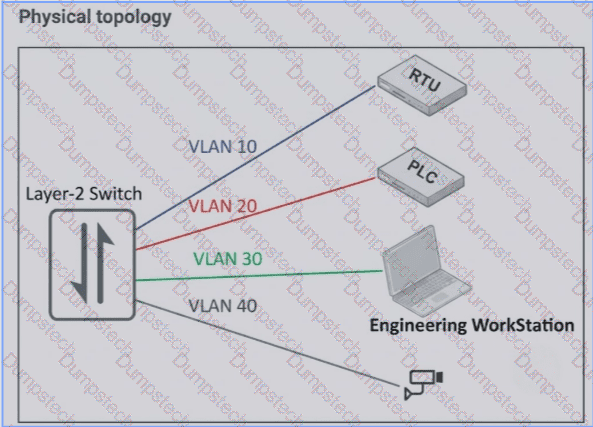
A partial OT network is shown. You have configured the FortiGate device with VLANs to segment the OT network. The supervisor now wants to connect to the PLC from the Engineering Workstation. How can you allow access from the Engineering Workstation to the PLC? (Choose one answer)

Options:

A.

You must configure intra-switch-policy as explicit.

B.

You must configure intra-switch-policy as implicit.

C.

You must configure forward domain IDs.

D.

You must configure a layer 3 switch.

Questions # 19:

Refer to the exhibits.

Question # 19

Question # 19

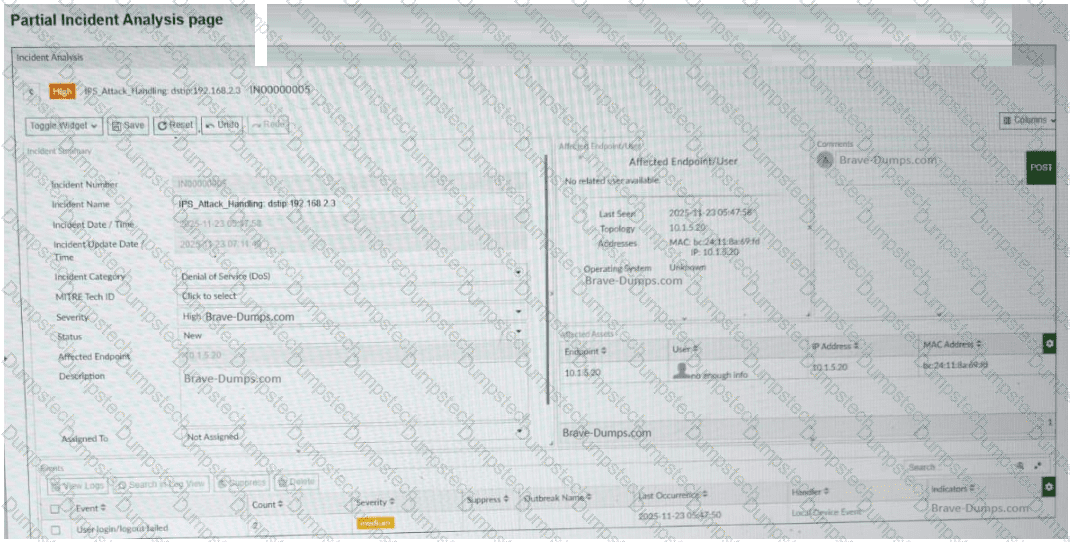
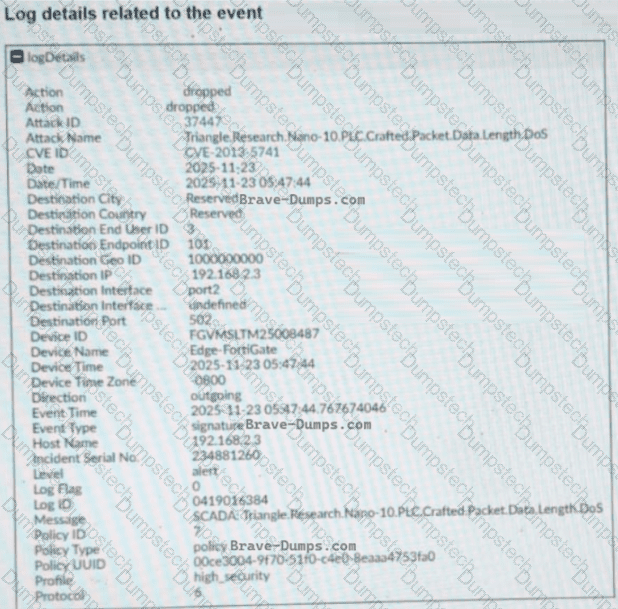
A partial Incident Analysis page and the log details related to the event are shown. An attack is reported on your OT network. You analyze the corresponding incident. Based on the information provided on the Incident Analysis page and the log details, which two statements are correct? (Choose two answers)

Options:

A.

The attack uses the Modbus protocol.

B.

The attack is mitigated.

C.

The attack uses the IEC 104 protocol.

D.

The event severity is high.

E.

The target device IP address is 10.1.5.20.

Questions # 20:

Which characteristic do the following industrial protocols share: Ethernet/IP, EtherCAT, and POWERLINK?

Options:

A.

They provide real-time data transmission.

B.

They follow the complete OSI model.

C.

They use a client-server architecture for communication.

D.

They provide a combination of ring and star topologies.

Viewing page 2 out of 2 pages
Viewing questions 11-20 out of questions