Summer Sale Limited Time 75% Discount Offer - Ends in 0d 00h 00m 00s - Coupon code = simple75

Pass the Autodesk Certified Professional BIM_MGT_101 Questions and answers with Dumpstech

Exam BIM_MGT_101 Premium Access

View all detail and faqs for the BIM_MGT_101 exam

Practice at least 50% of the questions to maximize your chances of passing.
Viewing page 1 out of 2 pages
Viewing questions 1-10 out of questions
Questions # 1:

A Revit model in Autodesk Forma that does not have any consultant links is opening for all team members except one. The project BIM manager has already audited and compacted the model.

What should the BIM manager do so that the team member can open the model?

Options:

A.

Clear the user’s collaboration cache files and retry again.

B.

Agree to a user request for a hardware upgrade.

C.

Roll back the model to a previous version.

D.

Publish the model to Autodesk Forma and ask the user to retry again.

Questions # 2:

A multidisciplinary healthcare project has multiple firms contributing to a federated model. Early coordination reviews reveal data inconsistencies, unauthorized edits, and missed communication between design teams.

What is the most appropriate first step to establish effective coordination and risk mitigation across the delivery team?

Options:

A.

Assign responsibility for each firm to review and maintain its own models, document identified issues, and present findings during scheduled coordination meetings.

B.

Implement tighter access controls within the Common Data Environment by defining permissions, monitoring edits, and restricting changes to authorized team members.

C.

Develop and communicate protocols that clarify model ownership, editing rights, quality-control procedures, and expected communication channels.

D.

Require each discipline to submit a detailed modelling strategy, document its assumptions, and use this information to identify and resolve potential design conflicts.

Questions # 3:

A designer needs to add Area Lines in an Area Plan, but upon adding them, they receive a message stating that none of the created elements are visible.
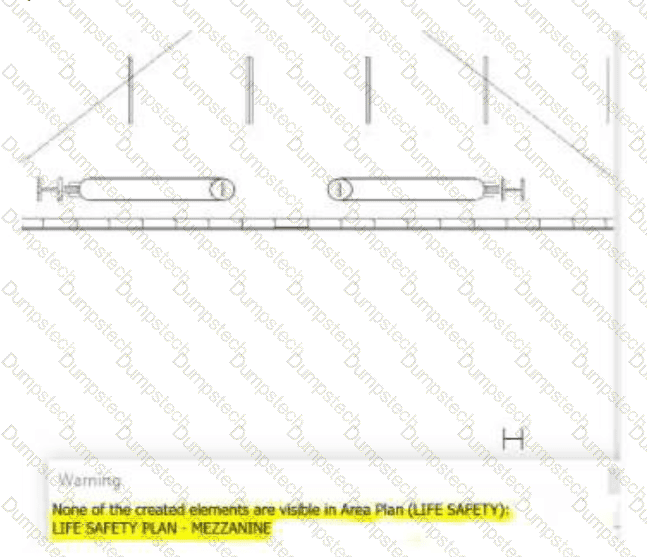
Question # 3

Where can they check to resolve the issue?

Options:

A.

Plan Region

B.

Detail Level

C.

Area Scheme

D.

Visibility/Graphics

Questions # 4:

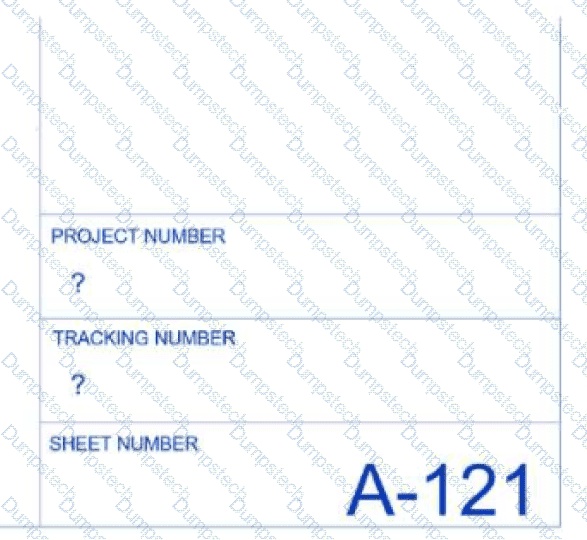
Refer to the exhibit.

Question # 4

A client has provided the design team with a title block family and a Shared Parameters file that must be used as part of their standards. Those provided parameters must be applied both in the Project Information area as well as the title block.

When the design team is in the project model and attempts to fill in information into the title block parameters, a question mark appears. What is the likely cause of this?

Options:

A.

The shared parameters were included in the title block family but were not loaded into the project file.

B.

The parameters were not included in the Shared Parameters file provided by the client.

C.

The Shared Parameters file was not added to the title block family and was using text instead of a label.

D.

The Sheet and Project Information fields were overwritten in the title block.

Questions # 5:

A client has provided a resource model with many custom shared parameters required to meet the project data-management requirements across all of its projects with the firm. The BIM manager has extracted those parameters to the Parameters Service for wider firm access.

Which tool should a team member use to load the new shared parameters into a project model? (Select the correct tool on the image.)
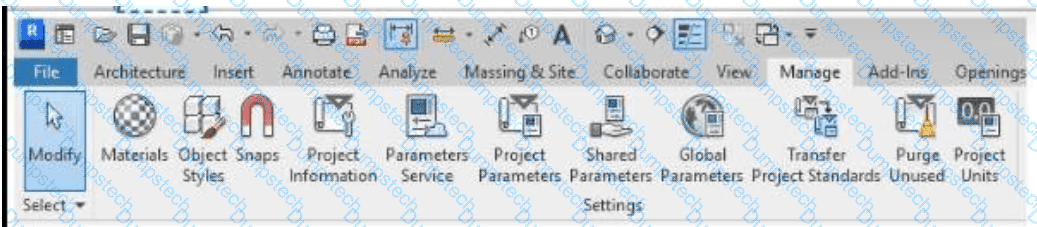
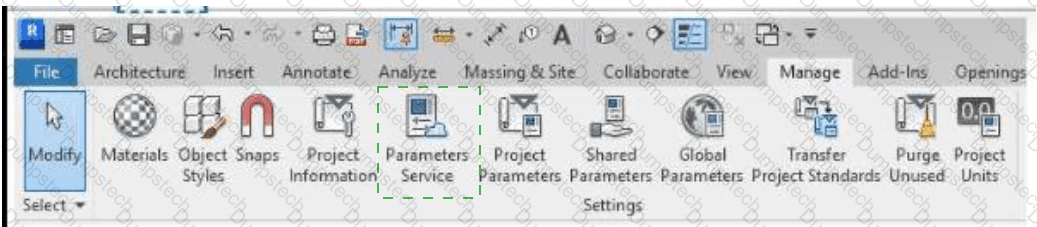
Question # 5

Options:

Questions # 6:

A BIM manager is creating a firm-wide template for mobilization plans to outline the key steps, resources, and strategies required to set up and launch BIM operations at the beginning of projects.

Which two components should the template include to accomplish the goal? (Select two.)

Options:

A.

Common Data Environment.

B.

Contract template.

C.

Roles and responsibilities.

D.

Specifications.

E.

Project milestone dates.

Questions # 7:

During a model health check, a BIM manager notices that an international airport project’s models are 1 GB each. The team has not mentioned any issues, but they did miss a recent 50% Construction Documents deadline.

What should the BIM manager do?

Options:

A.

Create a separate model for sheets and ask the team to audit and compact the models every day.

B.

Proceed to check another project’s model health since the team has not mentioned any issues.

C.

Coordinate with the project team to purge the model, remove unused views, and address warnings.

D.

Assign multiple BIM managers to the project and take one week to clear every warning.

Questions # 8:

The BIM manager received a subcontractor’s 3D model containing specialty equipment to be integrated into the federated model. Upon review, they observe that:

    Many elements lack consistent object styles and category assignments.

    Some components are modelled with excessive detail, affecting performance.

    Embedded data does not follow the project’s naming conventions outlined in the BEP.

What is the most appropriate next step when evaluating this geometry and content?

Options:

A.

Instruct the subcontractor to simplify geometry and reduce file size, even if some metadata and classifications are lost.

B.

Approve the model as-is to avoid delaying coordination and document the issues for review at the next quality-control milestone.

C.

Review the model against content standards, document noncompliance, and request revisions aligned with agreed deliverable requirements.

D.

Import the model into the coordination environment and apply view filters to hide excessive detail and inconsistencies.

Questions # 9:

During early coordination on a hospital project, the BIM manager runs a general clash detection between all models and generates over 3,000 clash results. Many are low-priority issues, such as wall-grid overlaps and minor duct-ceiling intersections. The project’s clash matrix outlines only high-impact clashes between structural, MEP, and architecture in specific zones.

For the BIM manager, what is the most appropriate next step to align clash reporting with the project’s coordination strategy?

Options:

A.

Share the full clash report with all project teams and instruct them to determine and resolve the issues they consider most important.

B.

Export the entire clash list into spreadsheet format so project managers can manually sort, review, and prioritize the items by trade.

C.

Disable or relax selected non-critical clash rules within the detection software to temporarily reduce the total number of reported issues.

D.

Apply the clash matrix to filter out low-priority clashes, adjust detection tolerances where appropriate, and produce reports for each discipline’s scope.

Questions # 10:

A BIM manager is preparing to share a federated model package with an external cost estimator. The estimator only needs access to quantities and location-based metadata, but not design intent or proprietary elements from other teams.

What is the first step the BIM manager should take to ensure appropriate use and minimize data-related risk?

Options:

A.

Export the models as PDFs to prevent the third party from modifying geometry.

B.

Confirm that the model content, format, and permissions match the recipient’s defined scope of use.

C.

Verify that the file sizes are small enough for email transmission.

D.

Convert the models into 2D views to avoid exposing embedded metadata.

Viewing page 1 out of 2 pages
Viewing questions 1-10 out of questions