
Pre-Winter Sale Limited Time 75% Discount Offer - Ends in 0d 00h 00m 00s - Coupon code = simple75
Pass the Cisco CCDE 400-007 Questions and answers with Dumpstech
Drag and drop the high-level descriptions of network automation and network orchestration on the left to the corresponding category on the right in no particular order.
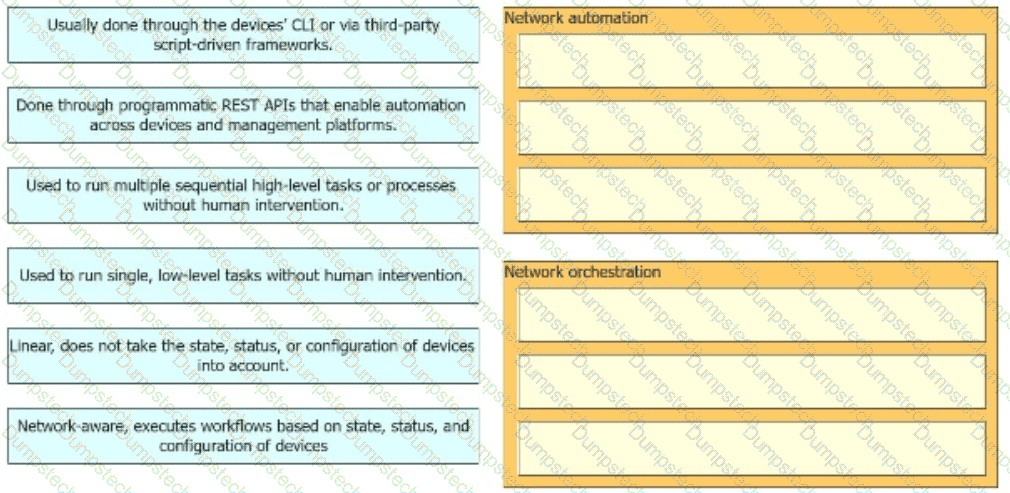

: 493 DRAG DROP
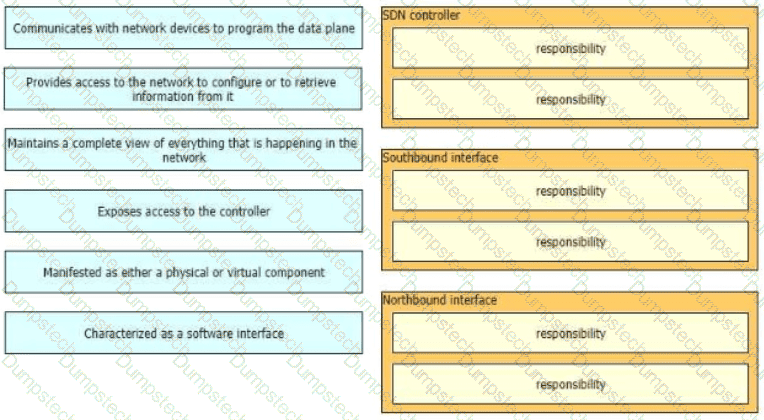
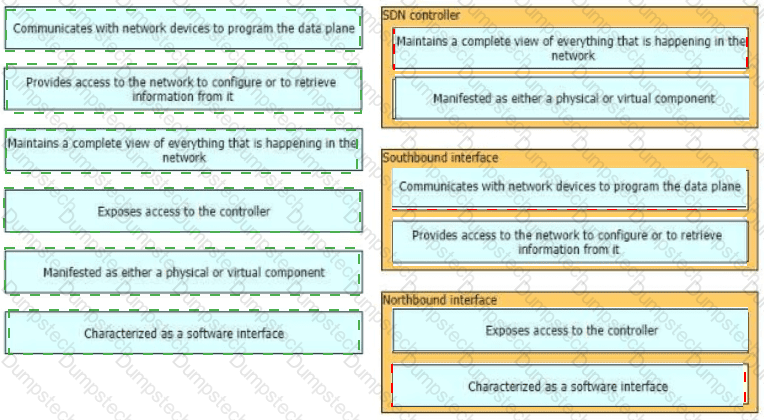
Any SDN architecture consists of many different components and moving parts that all are required for the network to properly function Drag and drop the responsibilities on the left to the appropriate component section on the right in no particular order
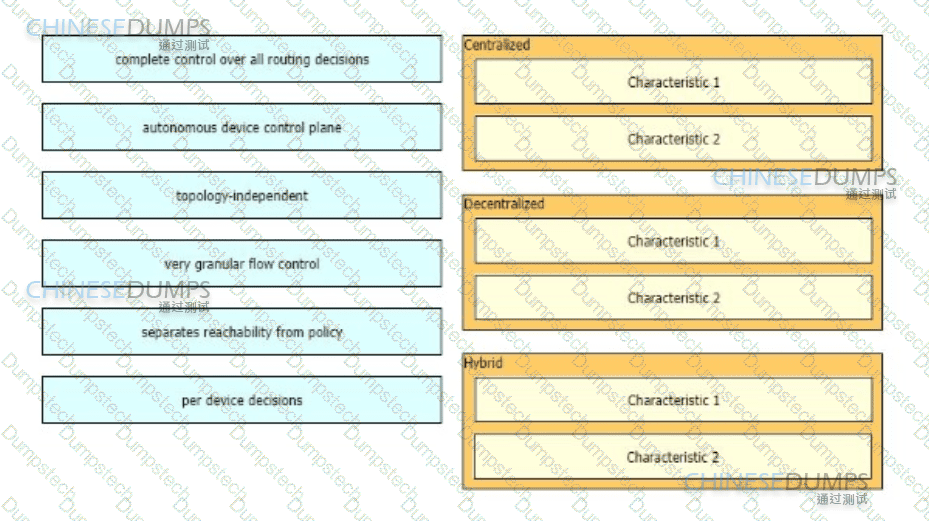
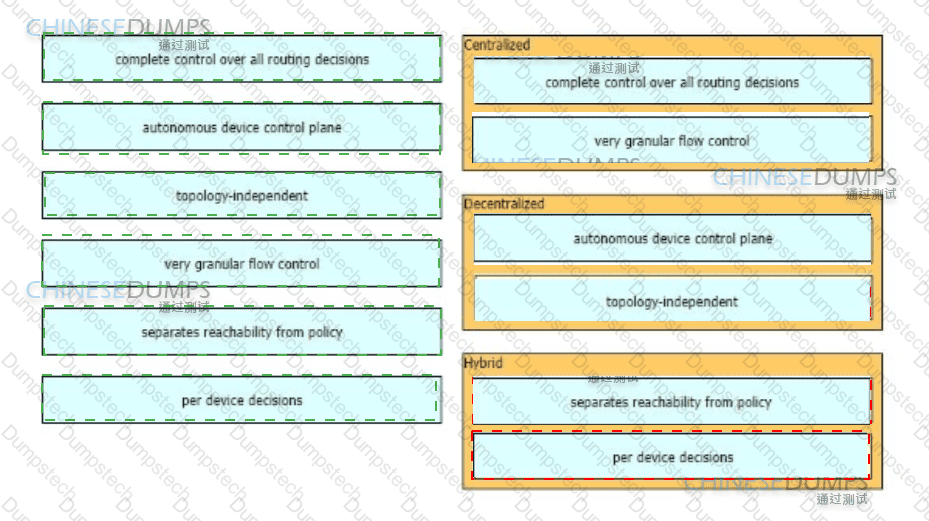
As part of a design solution a consultant needs to describe the trade-offs between different SDN models Drag the characteristics on the left to the correct controller-based network designs on the right in no particular order.
Refer to the exhibit.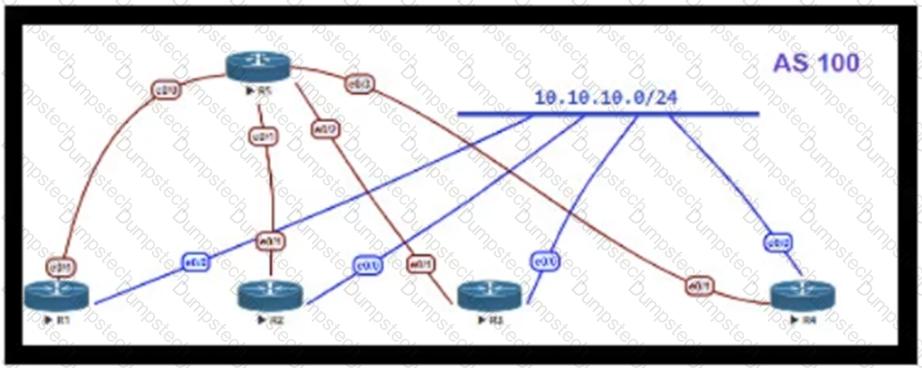
OSPF is running as the IGP to provide reachability to all AS100 networks. R3 and R4 are the current ABRs at the boundary of OSPF Area 0 and Area 1. Now BGP must be deployed within AS 100 because it will be receiving Internet routes from its eBGP peers (the service provider) connected to R1 and R2. What is an optimal solution for this deployment to configure BGP relationships and redistribute BGP learned routes into OSPF?
Refer to the exhibit.
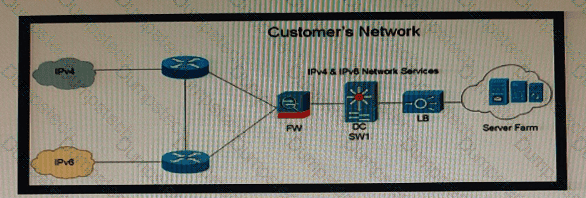
Company XYZ is currently running IPv4 but has decided to start the transition into IPv6. The initial objective is to allow communication based on IPv6 wherever possible, and there should still be support in place for devices that only support IPv4. These devices must be able to communicate to IPv6 devices as well. Which solution must be part of the design?
What are two advantages of controller-based networks versus traditional networks? (Choose two.)
Most security monitoring systems use a signature-based approach to detect threats. In which two instances are systems based on Network Behavior Anomaly Detection better than signature-based systems when it comes to detecting security threat vectors? (Choose two.)
Which undesired effect of increasing the jitter compensation buffer is true?
Which solution component helps to achieve rapid migration to the cloud for SaaS and public cloud leveraging SD-WAN capabilities?
A business requirement stating that failure of WAN access for dual circuits into an MPLS provider for a Data Centre cannot happen due to related service credits that would need to be paid has led to diversely routed circuits to different points of presence on the provider’s network. What should a network designer also consider as part of the requirement?
