
Black Friday VIP Hour Limited Time 75% Discount Offer - Ends in 0d 00h 00m 00s - Coupon code = simple75
Pass the F5 LTM Specialist 301a Questions and answers with Dumpstech
TWO LTM devices are in the same Device Group and configured for Ac live/Standby Failover. The LTM Specialist observes that the HA Active and Standby device constantly changes state. All network links use the default route domain A dedicated fiber ink is used for the HA connection with a latency of 250 ms but no packet loss.
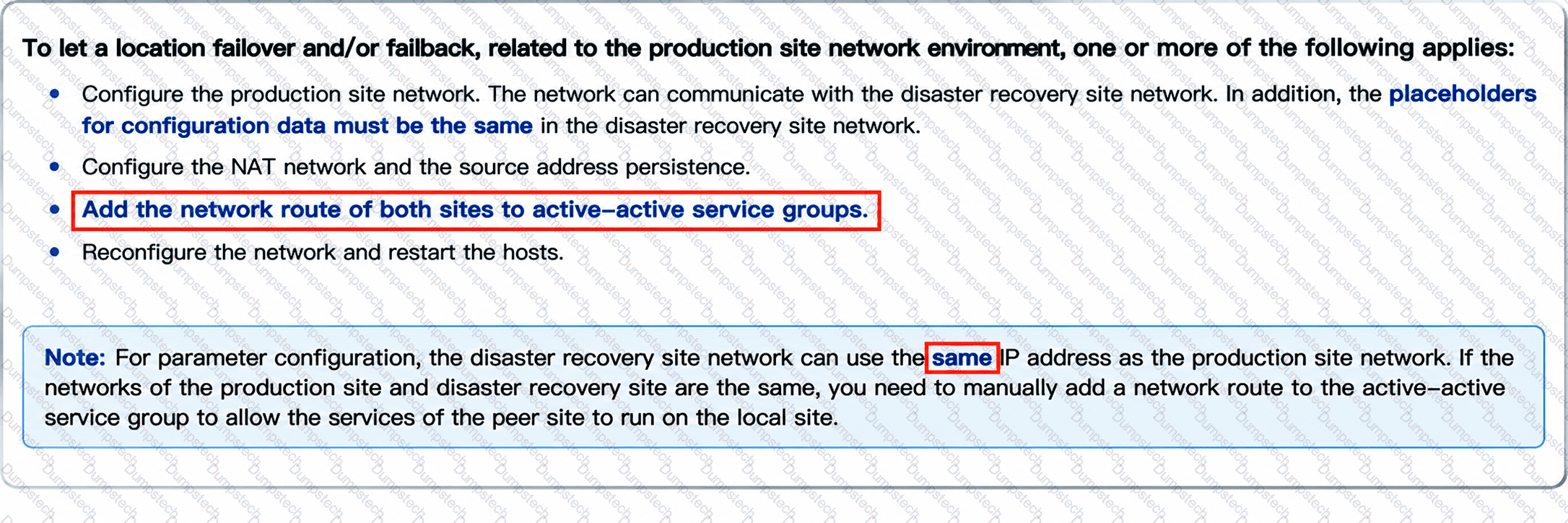
What is causing the change in failover state to occur?
An LTM device configuration is as shown:
An LTM device configuration is as shown
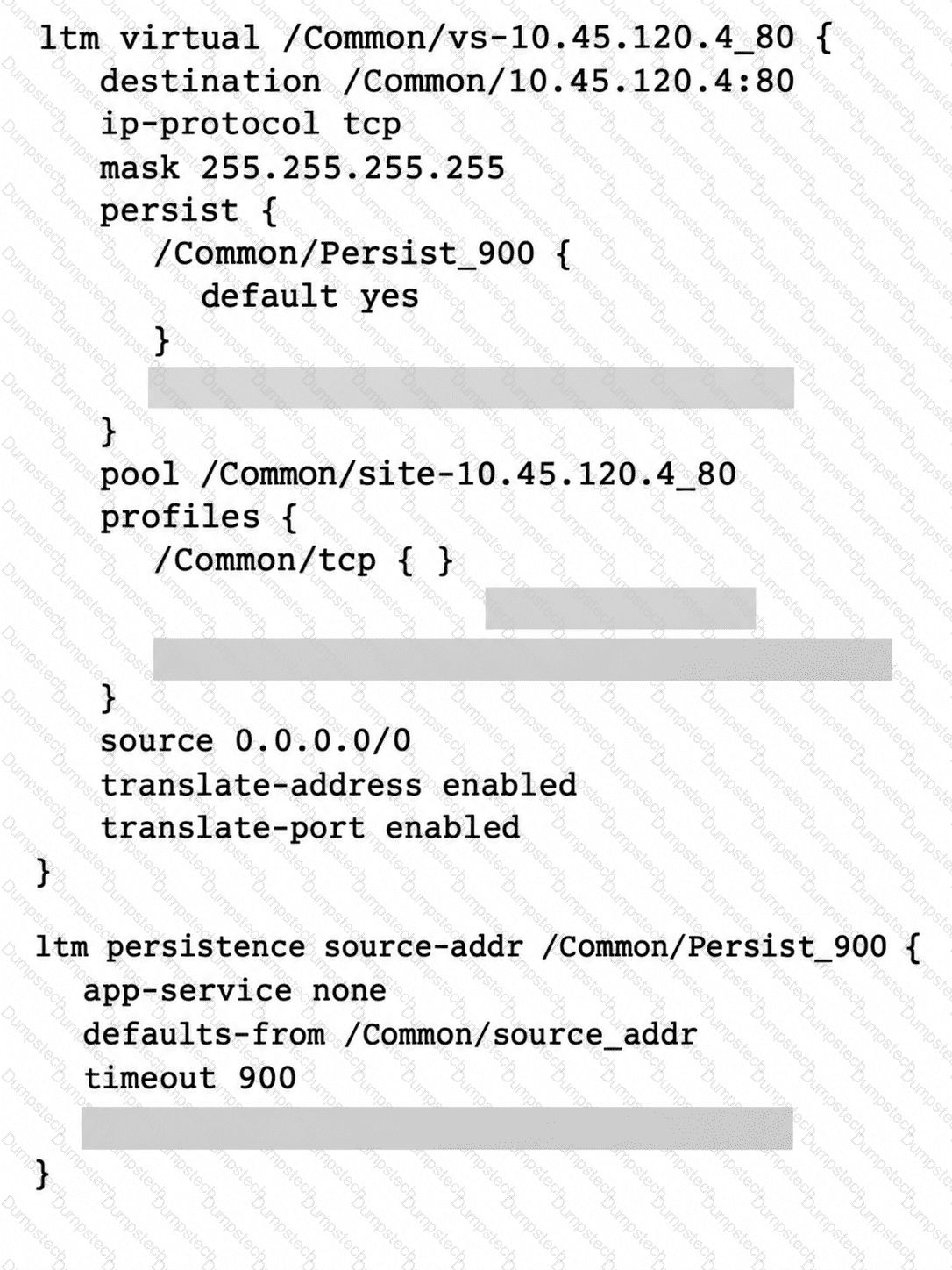
What should be the two expected outcomes based on this configuration? (Choose two.)
Forwarding virtual server exposes other ports
An LTM Specialist must create a new virtual server for HTTP access. The LTM Specialist creates a Forwarding virtual server to reach the resource. What is a potential result of this action? (Choose one answer.)
New remote syslog via TMSH
The network team has recently added a new syslog server with IP address 10.1.1.12. Which command adds the new syslog entry on the F5 LTM device? (Choose one answer.)
An LTM Specialist needs to configure a virtual server with the requirements displayed below.
Application is currently an internal HTTP application
Encrypted external user access
Links are hard for siteA example.com and need to rewritten to siteB.Example.com
Which profiles must the LTM Specialist use to provide the proper functionality?
Application sessions behind reverse proxy
An LTM Specialist is configuring a virtual server for a web application that stores sessions on the backend web server to authenticate the user. All incoming traffic comes from a proxy server, and the application uses the Least Connections load-balancing method. Which persistence method should the LTM Specialist use to ensure that each end user is directed to the same backend server with every request? (Choose one answer.)
High-connection-count SNAT configuration
An application is expected to maintain more than 100,000 concurrent TCP connections to a single pool member. What is an appropriate SNAT configuration in this situation? (Choose one answer.)
An LTM device provides load balancing to a web application? The LTM device has two dual-core processors and a licensed SSL Transactions Per Second (TPS) limit of 500 CMP is enabled.
TLS connections are used between client systems and virtual servers on the LTM device, as well as from the LTM device to servers used as part of LTM pool.
TLS enabled virtual servers utilize certificates based on 2048-bit keys
During a peak period. 2560 new TLS transactions per second are attempted to the web application via the LTM device.
What will happen in this scenario?
An LTM Specialist is the administrator of an HA pair that contains two BIG-IP units and one floating traffic group (TG1). A new project requires the creation of 30 virtual servers. The Specialist decides to create a new floating traffic group (TG2) to handle this requirement. Objects for this project created by the BIG-IP Managers must appears in the correct traffic group.
Which configuration should the LTM Specialist use to meet the requirement?
An LTM Specialist needs to add a pool that will load balance MYSOL services. It has four members, each with differing hardware platforms. All pool members are already assigned to another pool for load balancing FTP traffic.
Which load balancing method is most effective when the LTM Specialist sets up the pool?
