New Year Sale Limited Time 70% Discount Offer - Ends in 0d 00h 00m 00s - Coupon code = simple70

Pass the F5-CA F5CAB2 Questions and answers with Dumpstech

Exam F5CAB2 Premium Access

View all detail and faqs for the F5CAB2 exam

Practice at least 50% of the questions to maximize your chances of passing.
Viewing page 1 out of 2 pages
Viewing questions 1-10 out of questions
Questions # 1:

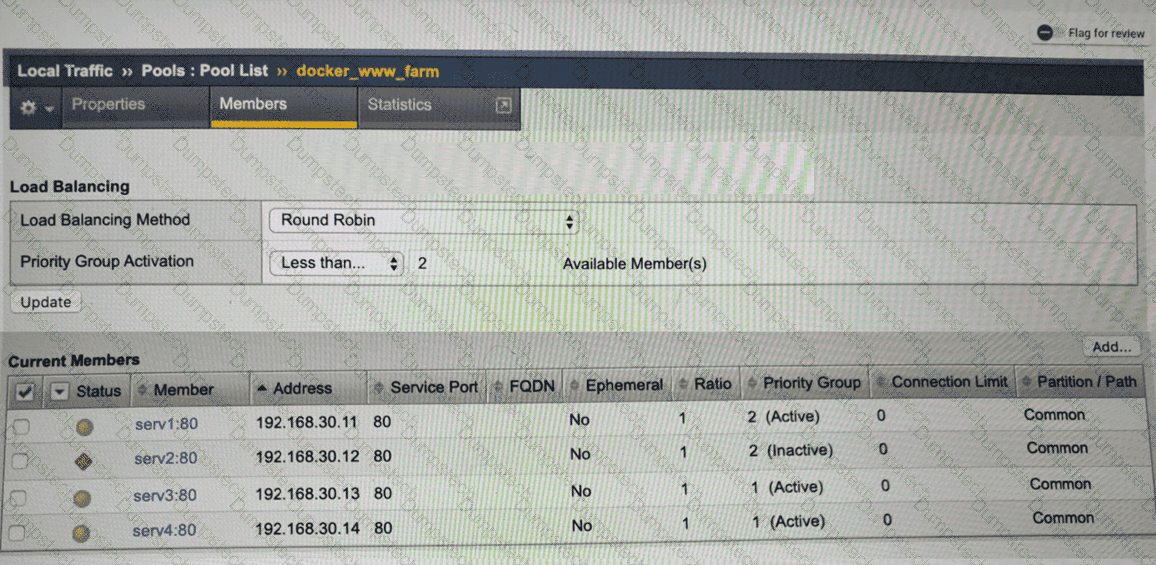
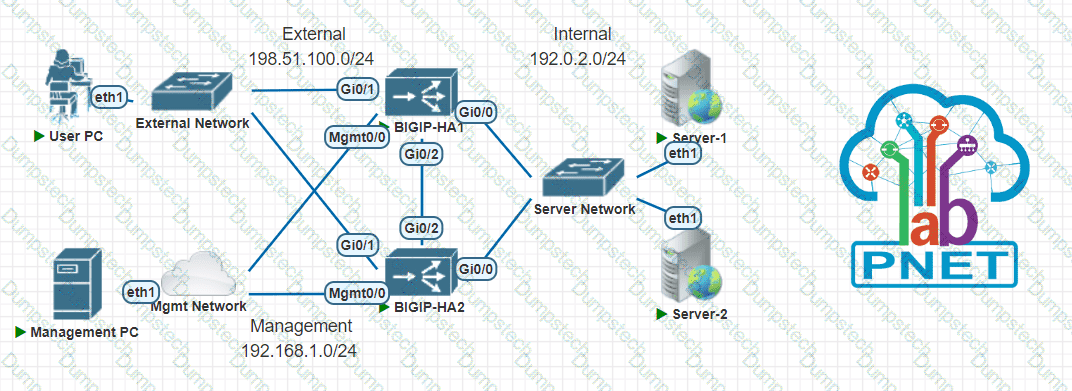
Refer to the exhibit above.

Question # 1

Question # 1

Question # 1

Question # 1

A BIG-IP pool is configured withPriority Group Activation = Less than 2 available members. The pool members have different priority groups and availability states. Which pool members arereceiving traffic? (Choose one answer)

Options:

A.

serv1

B.

serv1, serv3

C.

serv1, serv2, serv3, serv4

D.

serv1, serv3, serv4

Questions # 2:

An ecommerce company is experiencing latency issues with online shops during Black Friday’s peak season. The BIG-IP Administrator detects an overall high CPU load on the BIG-IP device and wants to move thetop utilized Virtual Serversto a dedicated BIG-IP device. Where should the BIG-IP Administrator determine the problematic Virtual Servers? (Choose one answer)

Options:

A.

Local Traffic > Virtual Servers > Virtual Server List

B.

System > Platform

C.

Statistics > Module Statistics > Local Traffic > Virtual Servers

D.

Local Traffic > Network Map

Questions # 3:

A virtual server is listening at 10.10.1.100:any and has the following iRule associated with it:

when CLIENT_ACCEPTED { if {[TCP::local_port] equals 21 } { pool

ftppool } elseif {[TCP::local_port] equals 23 } { pool telnetpool }

If a user connects to 10.10.1.100 and port 22, which pool will receive the request?

Options:

A.

ftppool

B.

telnetpool

C.

None. The request will be dropped.

D.

Unknown. The pool cannot be determined from the information provided.

Questions # 4:

Which three iRule events are likely to be seen in iRules designed to select a pool for load balancing? (Choose three.)

Options:

A.

CLIENT_DATA

B.

SERVER_DATA

C.

HTTP_REQUEST

D.

HTTP_RESPONSE

E.

CLIENT_ACCEPTED

F.

SERVER_SELECTED

G.

SERVER_CONNECTED

Questions # 5:

Whichvirtual server typeis being configured in the screenshot? (Choose one answer.)

Options:

A.

Standard

B.

Forwarding IP

C.

Performance Layer 4

Questions # 6:

A BIG-IP Administrator needs to connect a BIG-IP system totwo upstream switchesto provideexternal network resilience. The network engineer instructs the administrator to configureinterface binding with LACP. Which configuration should the administrator use? (Choose one answer)

Options:

A.

A virtual server with an LACP profile and the switches’ management IPs as pool members.

B.

A virtual server with an LACP profile and the interfaces connected to the switches as pool members.

C.

A Trunk listing the allowed VLAN IDs and MAC addresses configured on the switches.

D.

A Trunk containing an interface connected to each switch.

Questions # 7:

A BIG-IP system receives a client connection destined to1.0.0.10:8080. Multiple virtual servers are configured on the system. Which virtual server will process the connection? (Choose one answer)

Options:

A.

A forwarding virtual server configured with0.0.0.0:any

B.

A forwarding virtual server configured with1.0.0.10:any (port 0)

C.

A virtual server configured with destination1.0.0.10:8080and isavailable (green)

D.

A virtual server configured with0.0.0.0:8080

Questions # 8:

What should a BIG-IP Administrator configure tominimize impact during a failover? (Choose one answer)

Options:

A.

External monitors

B.

Clone pool

C.

OneConnect profile

D.

MAC masquerading

Questions # 9:

When upgrading a BIG-IP redundant pair, what happens when one system has been updated but the other has not?

Options:

A.

Synching should not be performed.

B.

The first system to be updated will assume the Active role.

C.

This is not possible since both systems are updated simultaneously.

D.

The older system will issue SNMP traps indicating a communication error with the partner.

Questions # 10:

The diagram below shows the TCP connection setup for an application.
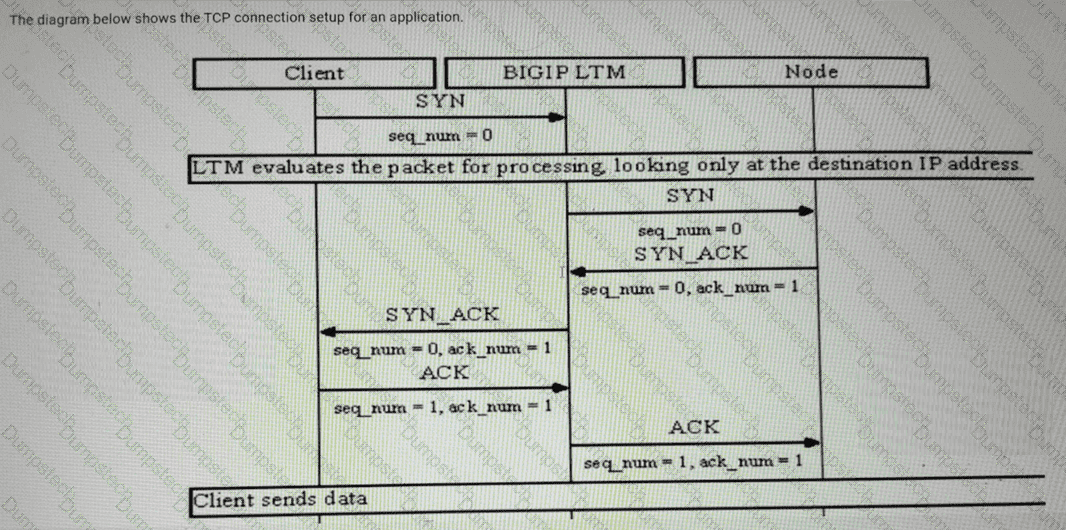
Question # 10

Which of the following virtual server types applies? (Choose one answer)

Options:

A.

Standard virtual server

B.

Forwarding IP virtual server

C.

Stateless virtual server

Viewing page 1 out of 2 pages
Viewing questions 1-10 out of questions