
Pre-Winter Sale Limited Time 75% Discount Offer - Ends in 0d 00h 00m 00s - Coupon code = simple75
Pass the Microsoft Certified: Azure Databricks Data Engineer DP-750 Questions and answers with Dumpstech
Which ingestion option should you recommend for each data source? To answer, drag the appropriate options to the correct data sources. Each option may be used once, more than once, or not at all. You may need to drag the split bar between panes or scroll to view content.
NOTE: Each correct selection is worth one point.
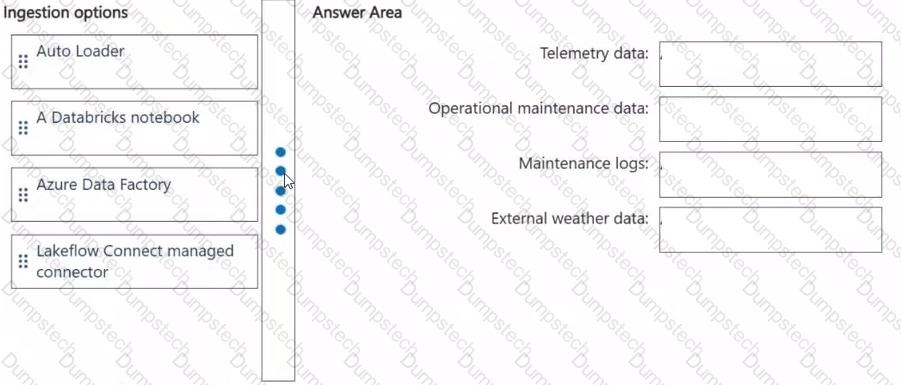
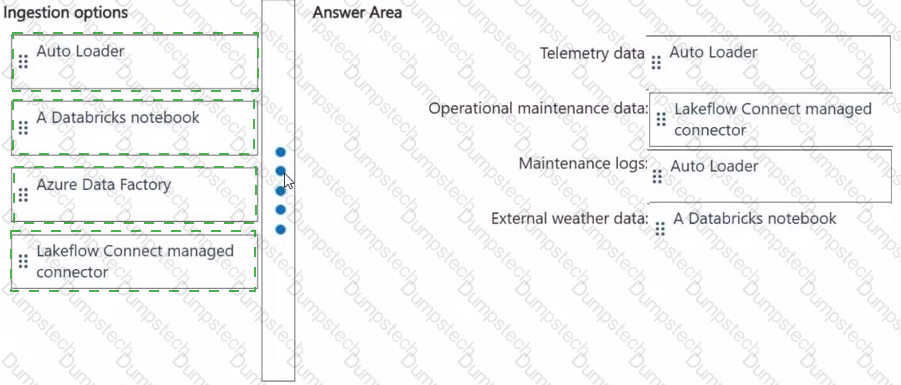
You need to develop the task logic for a new job in Lakeflow Jobs that processes telemetry data.
Each task must contain only the appropriate logic for its step in the pipeline. The solution must support the planned changes and meet the data ingestion and processing requirements.
What should you do?
Which SCD type should you use to support the planned data modeling changes? To answer, drag the appropriate types to the correct issues. Each type may be used once, more than once, or not at all. You may need to drag the split bar between panes or scroll to view content.
NOTE: Each correct selection is worth one point.
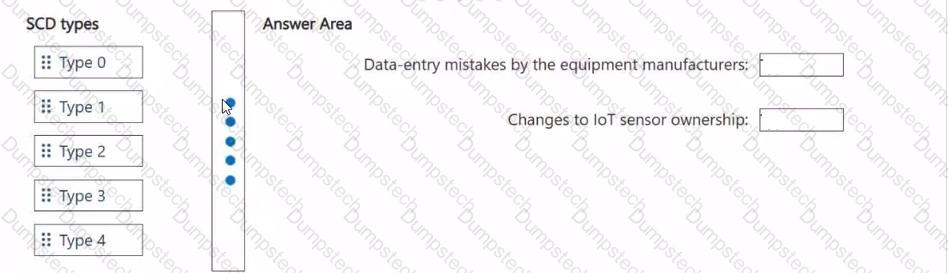
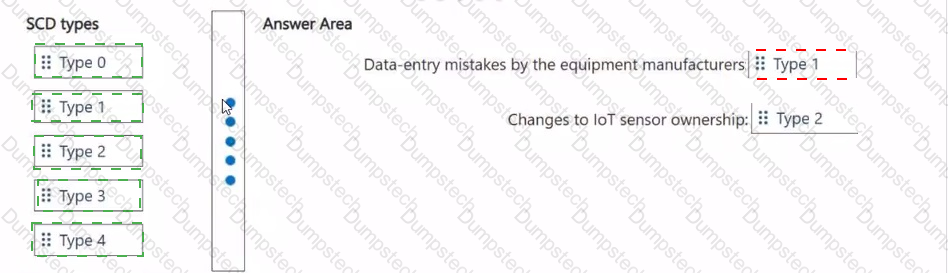
You need to configure compute for the ingestion of telemetry data. The solution must meet the data ingestion and processing requirements.
What should you do?
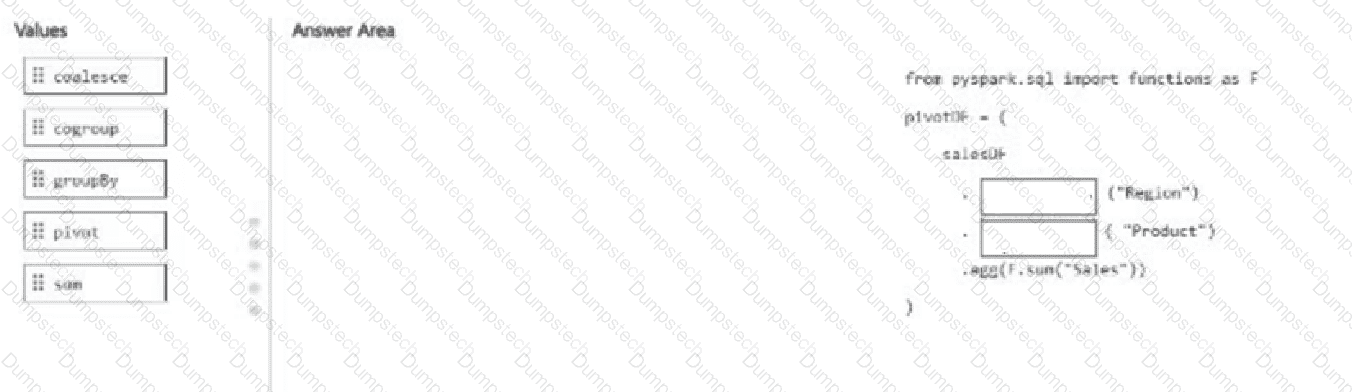
You have an Apache Spark DataFrame named salesDF that contains the following columns:
Product
Region
Sales
Date
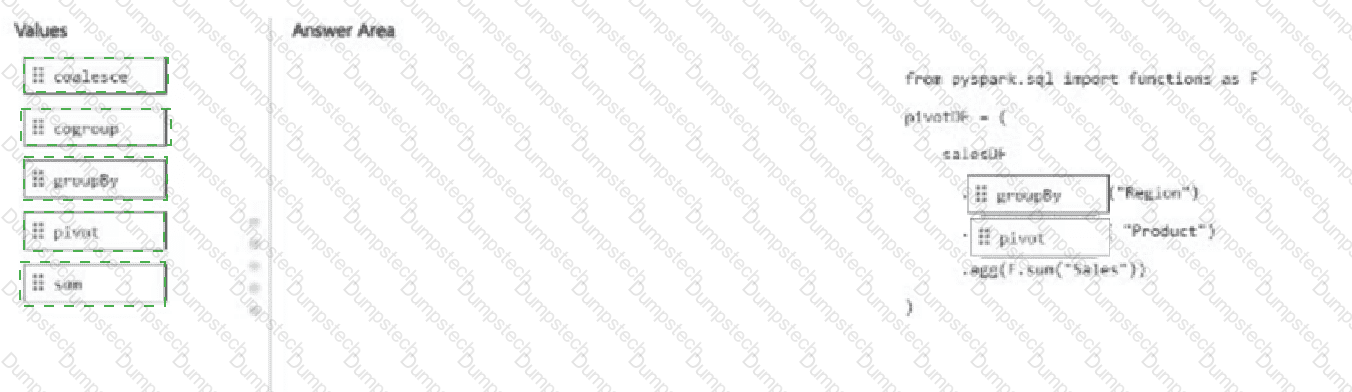
You need to create a pivot table that shows the total sales by product for each region.
How should you complete the PySpark code segment? To answer, drag the appropriate values to the correct targets. Each value may be used once, more than once, or not at all. You may need to drag the split bar between panes or scroll to view content.
NOTE: Each correct selection is worth one point.
You have an Azure Databricks workspace that is enabled for Unity Catalog and contains two Delta tables named Table1 and Table2 of the same data type.
Table1 contains a column named Columnl. Table2 contains a column named Column2. You run the following query.
SELECT Column1
FROM Table1
GROUP BY Column1
HAVING COUNT( " ) > 1
INTERSECT
SELECT C0lumn2
FROM Table2
GROUP BY Column2
HAVING COUNT( ' ) > 1;
What occurs when you run the query?
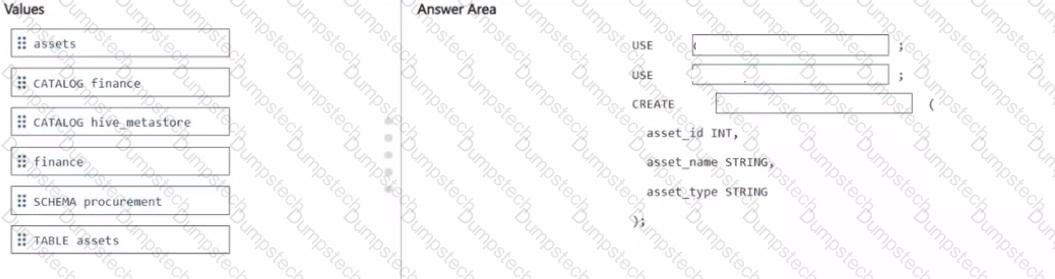
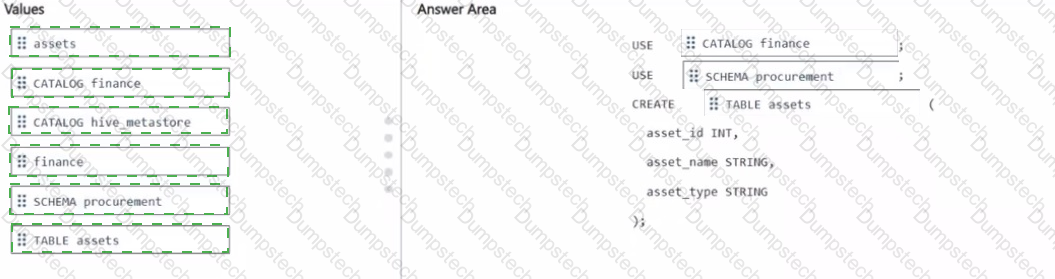
You have an Azure Databricks workspace that is enabled for Unity Catalog and contains a catalog named finance, finance contains two schemas named default and procurement.
You need to create a table named assets in the procurement schema, assets must contain the following columns:
• asset.id
• asset, type
• asset_name
How should you complete the SQL statement? To answer, drag the appropriate values to the correct targets. Each value may be used once, more than once, or not at all You may need to drag the split bar between panes or scroll to view content
NOTE: Each correct selection is worth one point.
You use Declarative Automation Bundles to manage two jobs and an app.
You need to deploy the bundle to development and production environments. The solution must meet the following requirements:
• Deploy the app to both environments.
• Deploy only one job to development.
• Minimize administrative effort.
What should you use?
You have an Azure Databricks workspace that is enabled for Unity Catalog and contains a managed Delta table named Payments.
Payments stores transaction data and contains a column named payment_amount of the Decimal data type.
You must enforce the following business rule:
payment_amount must be between 0 and 10,000, inclusive
You need to ensure that records that violate the rule are rejected when data is written to the Payments table.
What should you do?
You have an Azure Databricks workspace.
You have an Apache Spark Structured Streaming job named Job! that processes data continuously and fails periodically due to transient errors
You need to ensure that Job! meets the following requirements
• Resumes processing from the point that Job1 failed
• Minimizes how long it takes to restart Job!
• Minimizes the costs to restart Job!
What should you do?
