
75only - Ends in 0d 00h 00m 00s - Coupon code = 75only
Pass the NCCT Surgical Technology TS-C Questions and answers with Dumpstech
At what age are patients no longer considered pediatric?
Options:
18
15
12
16
Eighteen years of age is the conventional administrative threshold used to distinguish pediatric from adult patients in many healthcare facilities, making option A the intended examination answer.
Pediatric patients have distinctive physiological, anatomical, psychological, and developmental characteristics that influence perioperative care. These differences affect anesthesia management, medication dosing, thermoregulation, surgical positioning, fluid requirements, and communication.
For example, younger pediatric patients have relatively greater body surface area compared with body mass, increasing susceptibility to perioperative heat loss. Age-dependent anatomical differences may also influence airway management and selection of monitoring equipment.
Options B, C, and D are incorrect within the conventional examination classification because patients aged 12, 15, or 16 remain within pediatric or adolescent age groups.
However, the American Academy of Pediatrics (AAP) does not establish 18 years as a universal endpoint for pediatric care. Its policy discourages arbitrary age limits and recognizes that pediatric services may extend into young adulthood according to clinical needs.
American Academy of Pediatrics+1
Therefore, chronological age alone should not determine whether specialized pediatric care is appropriate.
The surgical technologist must anticipate the needs of younger patients and collaborate with the anesthesia and nursing teams to implement age-appropriate safety measures.
Which of the following patient populations is at the HIGHEST risk of deep vein thrombosis?
Options:
Adolescent
Geriatric
Neonatal
Pediatric
Geriatric patients have the highest general risk of developing deep vein thrombosis (DVT) among the populations listed because advancing age is an established risk factor for venous thromboembolism (VTE).
DVT occurs when a thrombus forms within the deep venous system, most commonly in the lower extremities. The pathophysiology is associated with Virchow ' s triad: venous stasis, endothelial injury, and hypercoagulability.
Older surgical patients frequently experience reduced mobility, chronic cardiovascular disease, venous insufficiency, malignancy, or other medical conditions that increase thrombotic risk. Prolonged surgery, anesthesia, and postoperative immobility may further contribute to venous stasis.
The Centers for Disease Control and Prevention identifies increasing age as a significant VTE risk factor. Hospitalization, surgery, and restricted movement further increase risk.
CDC+1
Option A is incorrect because adolescents generally have a lower baseline DVT risk than older adults. Option C is incorrect because neonatal thrombosis is often associated with specific conditions, including central venous catheterization. Option D is incorrect because pediatric patients generally experience lower rates of DVT than geriatric patients.
The surgical technologist supports prevention by assisting with appropriate positioning, avoiding unnecessary venous compression, and preparing intermittent pneumatic compression devices when prescribed.
Pharmacological prophylaxis, when indicated, is determined by the responsible licensed clinician.
The surgical technologist is setting up for a hip hemiarthroplasty. If it is not listed on the surgeon ' s preference card, which of the following handheld retractors should the surgical technologist have available?
Options:
Retractor shown in Option A.
Retractor shown in Option B.
Retractors shown in Option C.
Hibbs retractor shown in Option D.
The Hibbs retractor , illustrated in Option D, is an appropriate handheld orthopedic retractor for hip hemiarthroplasty. Its broad blade and toothed working end provide controlled retraction of substantial soft tissues, allowing the surgeon to obtain adequate exposure of the hip joint.
Hip hemiarthroplasty involves replacing the femoral head with a prosthetic component while preserving the native acetabulum. Effective retraction is necessary during surgical exposure, capsular dissection, femoral head removal, and preparation of the proximal femur.
The Hibbs retractor has a characteristic double-ended configuration, with a toothed blade and a curved end. It is particularly useful for retracting muscular and fascial tissues surrounding the hip.
Published orthopedic techniques describe the use of Hibbs retractors during hip arthroplasty, including anterior approaches to hemiarthroplasty, where the instrument helps retract the rectus femoris and expose the underlying joint capsule.
PubMed Central (PMC)+1
Option A does not represent the most appropriate instrument for the specified application.
Option B depicts another handheld retraction instrument, but it is not the best selection in this exhibit.
Option C depicts smaller double-ended retractors more suitable for superficial tissue exposure.
The surgical technologist should anticipate appropriate retractors, verify instrument availability, and ensure that deep tissue retraction is performed without excessive pressure on neurovascular structures.
In what order should surgical counts be performed when beginning closure of a colectomy with a colostomy?
Drag the following options into their correct sequence.

Options:

1
In the cavity
2
The fascia
3
On the Mayo stand
4
On the back table
5
Off the sterile field
Surgical counts during closure of a colectomy with colostomy are performed systematically to prevent retained surgical items, including sponges, needles, instruments, and miscellaneous surgical materials. A standardized progression ensures that countable items are accounted for before anatomical structures are permanently closed.
First, the abdominal cavity is assessed to identify and account for items remaining within the operative site. This is particularly important following bowel surgery, where laparotomy sponges and instruments may have been placed deep within the abdomen.
Second, the fascia represents the next critical closure checkpoint. The surgical team must verify the applicable counts before fascial closure progresses, because this layer will restrict subsequent access to the abdominal cavity.
Third, the Mayo stand is counted because it contains instruments and supplies immediately available to the surgeon.
Fourth, the back table is counted to reconcile additional instruments, sponges, sharps, and other countable supplies.
Finally, items off the sterile field are included, such as discarded sponges, instruments removed from use, or items transferred to the circulating nurse.
The Association of Surgical Technologists recommends a standardized count progression from the surgical field to the Mayo stand, back table, and off-field locations. A count discrepancy requires immediate reconciliation according to institutional policy before closure proceeds.
Standard Counts+1
When exposing the abdominal cavity during a right hemicolectomy, which of the following should the surgical technologist anticipate the surgeon needing?
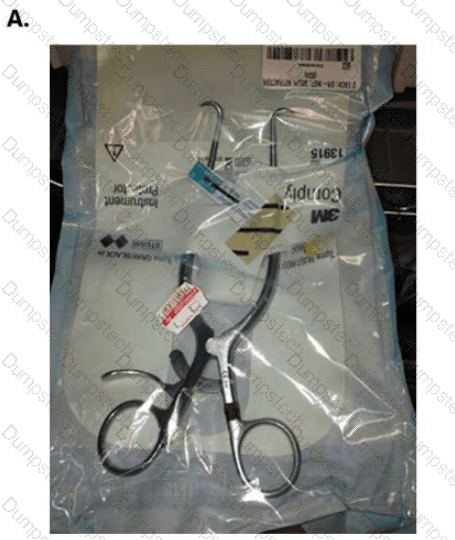
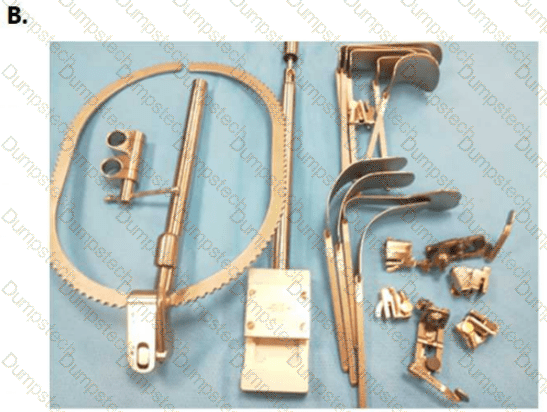
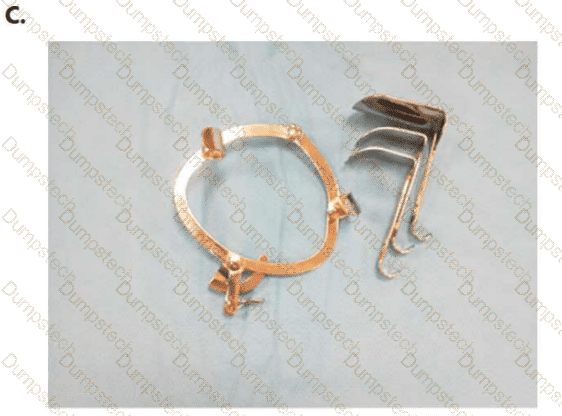
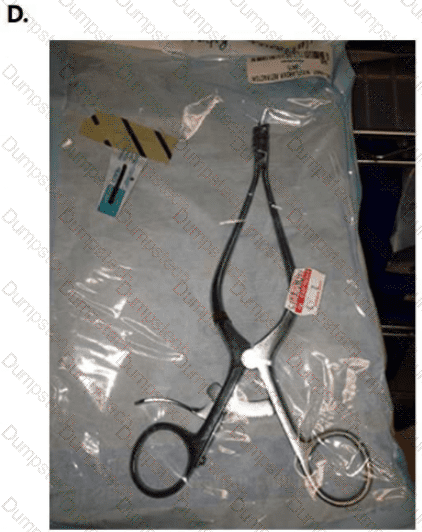
User attachment
Options:
Instrument shown in Option A — Surgical clamp.
Instrument shown in Option B — Bookwalter self-retaining retractor system.
Instrument shown in Option C — O ' Sullivan–O ' Connor-type retractor system.
Instrument shown in Option D — Surgical clamp.
The Bookwalter self-retaining retractor system , illustrated in Option B, is the most appropriate instrument for establishing and maintaining abdominal exposure during an open right hemicolectomy.
A right hemicolectomy involves removing the cecum, ascending colon, and potentially portions of the terminal ileum and transverse colon. Adequate visualization is essential for mobilization of the right colon, vascular ligation, bowel division, and intestinal anastomosis.
The Bookwalter system consists of an adjustable ring, table-mounted support, interchangeable retractor blades, and locking mechanisms. These components provide stable, hands-free retraction of the abdominal wall and surrounding tissues. The surgeon can adjust blade position and depth to obtain appropriate exposure throughout the operation. Surgical references specifically describe using the Bookwalter for open abdominal procedures, including right-sided colonic surgery.
StudFiles+1
Option A depicts a clamp rather than a comprehensive abdominal retraction system.
Option C depicts a smaller ring-style self-retaining retractor system, which may be used in abdominal or pelvic procedures, but is less characteristic of the extensive exposure required for this operation.
Option D depicts another clamp and does not provide the broad, sustained abdominal wall retraction required.
The surgical technologist must verify the retractor components, assemble the system correctly, and anticipate blade adjustments throughout the procedure.
Which of the following should be used on surgical instruments when breaking down the sterile field?
Options:
Sterile water
Chlorhexidine gluconate
Enzymatic solution
Isopropyl alcohol
An enzymatic solution is the most appropriate choice for point-of-use instrument treatment during sterile-field breakdown, provided it is compatible with the instruments and their manufacturers ' instructions for use.
Enzymatic cleaning products contain substances designed to break down organic material, including proteins, fats, and other biological residues. These products help prevent blood, tissue, and body fluids from drying onto instruments before formal decontamination.
The Centers for Disease Control and Prevention recommends prompt instrument cleaning and appropriate use of enzymatic detergents according to manufacturer instructions.
CDC
Option A is not the best examination answer for the specified breakdown phase. Sterile water is appropriate for wiping and flushing instruments during surgery and may be used for point-of-use moistening when required by device instructions.
Option B is incorrect because chlorhexidine gluconate is primarily an antiseptic used on skin and is not a routine surgical instrument cleaning agent.
Option D is incorrect because isopropyl alcohol is not an appropriate general instrument pretreatment solution and does not provide the required removal of organic debris.
The surgical technologist must segregate sharps, protect delicate instrumentation, and prepare contaminated items for safe transportation.
Enzymatic pretreatment is not a substitute for validated cleaning, inspection, and sterilization in the Sterile Processing Department.
While dissecting into the abdominal cavity, the surgeon comments on how vascular the patient ' s anatomy is. What should the surgical technologist anticipate NEXT?
Options:
Scalpel
Ties
Allis clamp
Stapling device
The surgical technologist should anticipate the need for surgical ties (ligatures) when the surgeon identifies highly vascular tissue during abdominal dissection. Highly vascular anatomical structures contain numerous blood vessels that may be injured during tissue separation, increasing the potential for intraoperative hemorrhage.
Surgical ties are used to ligate blood vessels, vascular pedicles, and other structures requiring secure mechanical occlusion. Effective ligation interrupts blood flow through the targeted vessel and supports hemostasis before further dissection. Depending on vessel size and tissue characteristics, the surgeon may select absorbable or nonabsorbable ligatures, free ties, or suture ligatures.
The surgical technologist must anticipate the appropriate suture material, prepare ligatures according to the surgeon ' s preference, and ensure that hemostatic clamps and other bleeding-control instruments are readily available.
Option A is incorrect because a scalpel facilitates tissue incision but does not directly control bleeding. Option C is incorrect because an Allis clamp is primarily designed for grasping and holding relatively firm tissues. Option D is incorrect because a stapling device may provide tissue division or vascular control in selected procedures but is not the most appropriate immediate response to the surgeon ' s observation.
Prompt availability of ligatures supports controlled dissection, minimizes blood loss, and maintains visualization of the operative field.
Society of Laparoscopic & Robotic Surgeons+1
Which of the following contains the information necessary to gather all items for a surgical case?
Options:
Surgeon ' s preference card
Instrument count sheet
History and physical
Surgical checklist
The surgeon ' s preference card is the primary reference used by the surgical technologist to identify and gather the instruments, equipment, supplies, sutures, medications, and other materials required for a particular surgical procedure.
Preference cards are generally individualized according to the surgeon and procedure. They may specify instrument trays, specialty equipment, patient positioning, draping materials, skin preparation, anticipated implants, irrigation solutions, and preferred wound closure materials.
The surgical technologist reviews the preference card before the procedure to ensure that essential items are available and that equipment is functioning correctly. Accurate preference cards reduce unnecessary delays, prevent missing instruments, and support efficient operating room preparation.
Option B is incorrect because an instrument count sheet documents the instruments within a set and supports surgical count reconciliation. It does not provide the complete equipment and supply requirements.
Option C is incorrect because the history and physical examination documents the patient ' s medical condition and clinical findings.
Option D is incorrect because a surgical checklist is primarily used to verify essential patient-safety and procedural requirements.
The American College of Surgeons identifies preference cards as procedure-specific lists of instruments, supplies, equipment, and operating room setup requirements.
ACS
Reference Topics: NCCT TS-C Detailed Test Plan — Preoperative Care and Preparation, Section 2A2: Use Preference Card to Obtain Supplies; Section 2A1: Operating Room Preparation; Section 2A5: Instrument Assessment and Assembly.
ncctinc.com
Who directs the move when transferring a patient following surgery?
Options:
Circulator
Surgeon
Surgical technologist
Anesthesia provider
The anesthesia provider directs the transfer of a patient following surgery because this professional is responsible for assessing the patient ' s anesthetic recovery, protecting the airway, and coordinating movement when the patient ' s physiological condition permits safe transfer.
During the immediate postoperative period, patients may remain sedated, partially anesthetized, intubated, or physiologically unstable. Moving the patient prematurely can result in airway obstruction, accidental dislodgement of an endotracheal tube, loss of intravenous access, or injury to the patient and healthcare personnel.
The Association of Surgical Technologists ' patient transportation guidelines specify that the anesthesia provider indicates when an immobile patient may be moved and maintains responsibility for protecting the head, neck, and airway during transfer.
ast.org
Option A is incorrect because the circulating nurse coordinates equipment, verifies the safety of lines and drains, and assists with transfer but does not ordinarily direct movement when the anesthesia provider is managing the airway.
Option B is incorrect because the surgeon ' s primary responsibility concerns surgical management and postoperative surgical orders.
Option C is incorrect because the surgical technologist assists with positioning and transfer but does not independently authorize patient movement.
Before transfer, the team must secure the stretcher and operating table, manage attached devices, and use appropriate transfer equipment. Movement should occur on a clearly communicated command.
What is the proper sequence for performing a surgical hand scrub?
Options:
Fingers, under fingernails, hands, arms up to the elbows.
Arms up to the elbows, hands, fingers, under fingernails.
Under fingernails, fingers, hands, arms up to the elbows.
Hands, arms up to the elbows, fingers, under fingernails.
The correct sequence begins with cleaning beneath the fingernails, followed by the fingers, hands, and forearms , proceeding from the distal areas toward the proximal portions of the upper extremities.
The subungual regions beneath the fingernails commonly harbor substantial concentrations of microorganisms and organic debris. These areas should be cleaned initially using an approved disposable nail cleaner under running water.
Following nail cleaning, surgical hand antisepsis proceeds systematically from the fingertips through the interdigital spaces, hands, wrists, and forearms.
The Association of Surgical Technologists specifies that the surgical scrub should begin at the fingertips and proceed to approximately two inches above the elbows without returning to previously cleaned areas.
ast.org
Option A is incorrect because it places general finger cleaning before the preliminary subungual cleaning step.
Option B is incorrect because starting at the forearms reverses the correct direction of cleansing.
Option D is incorrect because the sequence moves from proximal areas back toward the fingers and fingernails.
The hands should remain elevated above the elbows during rinsing so that water flows toward the less-clean proximal regions.
Following an aqueous surgical scrub, sterile towel drying is performed before gowning and gloving. Alcohol-based surgical hand preparations require complete drying according to the manufacturer ' s instructions.
Modal title
