
Pre-Winter Sale Limited Time 75% Discount Offer - Ends in 0d 00h 00m 00s - Coupon code = simple75
Pass the VMware VCAP-VKS 3V0-24.25 Questions and answers with Dumpstech
Exam 3V0-24.25 Premium Access
View all detail and faqs for the 3V0-24.25 exam
The vSphere Admin creates a vSphere Namespace harbor-project and grants the DevOps Engineer edit permissions. The DevOps Engineer deploys the Harbor service in thisnamespace with the command: kubectl apply -f harbor-svc.yml
The Harbor service deploys successfully, but the database data harbor database 0 pods does not come into a Running state.
Click the two locations where the administrator should verify the Access Modes forthis pod's PerslstentVolumeClaim (PVC). (Choose two.)


How should an administrator enable autoscaling for a vSphere Kubernetes Service (VKS) cluster?
An administrator is upgrading an existing VMware vSphere Kubernetes Service (VKS) cluster and receives the following errors:
kubectl get nodes fails with memcache.go and “server is currently unable to handle the request”
couldn't get resource list for stats.antrea.tanzu.vmware.com/v1alpha1
yaml: mapping values are not allowed in this context
The administrator successfully updated the Supervisor, but an attempt to update the VKS cluster failed. Based on the scenario, what is the cause of the problem?
An administrator is maintaining several Kubernetes clusters deployed through a Supervisor Namespace in a vSphere Kubernetes Service environment. One of the micro-services (a containerized API gateway) is failing intermittently after a recent configuration update. The pod is entering aCrashLoopBackOffstate. The administrator needs to collect detailed runtime information directly from the pod, including both thestandard output (STDOUT)andstandard error (STDERR)streams, to analyze the application's behavior before the crash.
Which command produces the required output?
What Kubernetes object is used to grant permissions to acluster-wideresource?
Which two package management tools can be used to configure and install applications on VMware vSphere Kubernetes Service (VKS)? (Choose two.)
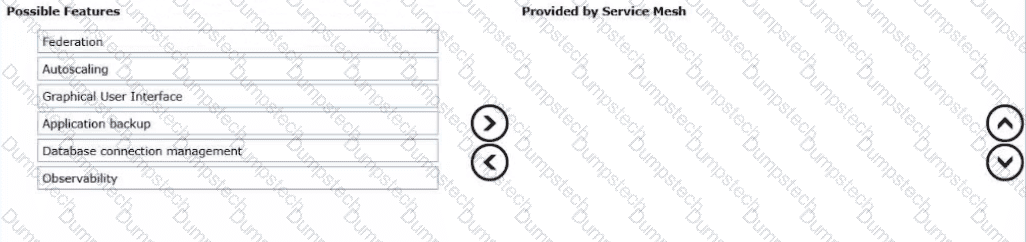
Drag and drop the three features into the correct order from Possible Features list on the left and place them into the Provided by Service Mesh on the right side. (Choose three.)

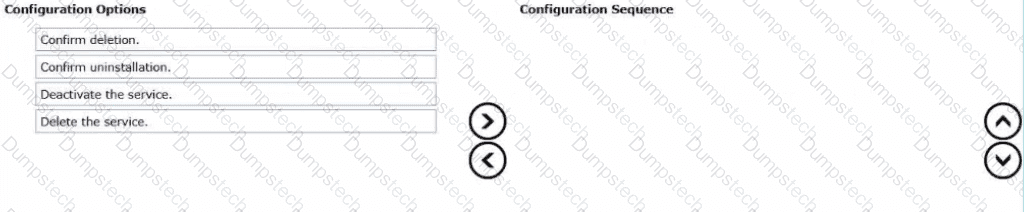
The administrator has completed a proof of concept for using Harbor as a container registry part of the Supervisor services and you are tasked for cleaning up the environment, starting with the unlnstall of the Harbor Supervisor service.
Drag and drop the four tasks into the correct order from Configuration Options on the left and place them into the Configuration Sequence on the right. (Choose four)

An administrator is tasked with installingIstio Service Meshfor VMware vSphere Kubernetes Service (VKS). Which command installs Istio?
A company standardized on the following configurations:
• vSphere Kubernetes Service (VKS) upgrade is separate from vCenter upgrades.
• A private registry will be utilized.
How should an administrator adhere to these standards?
