
75only - Ends in 0d 00h 00m 00s - Coupon code = 75only
Pass the Microsoft Certified: Azure Database Administrator Associate DP-300 Questions and answers with Dumpstech
What should you do after a failover of SalesSQLDb1 to ensure that the database remains accessible to SalesSQLDb1App1?
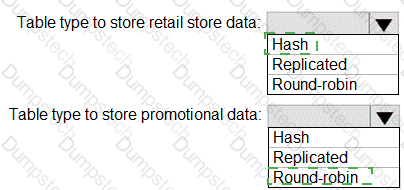
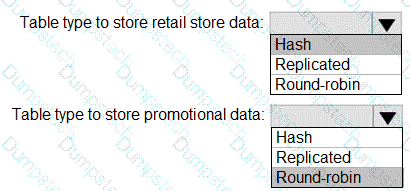
You need to design an analytical storage solution for the transactional data. The solution must meet the sales transaction dataset requirements.
What should you include in the solution? To answer, select the appropriate options in the answer area.
NOTE: Each correct selection is worth one point.

You need to design a data retention solution for the Twitter feed data records. The solution must meet the customer sentiment analytics requirements.
Which Azure Storage functionality should you include in the solution?
You need to implement the surrogate key for the retail store table. The solution must meet the sales transaction dataset requirements.
What should you create?
You have an Azure subscription that uses a domain named contoso.com.
You have two Azure VMs named DBServer1 and DBServer2. Each of them hosts a default SQL Server instance. DBServer1 is in the East US Azure region and contains a database named DatabaseA. DBServer2 is in the West US Azure region.
DBServer1 has a high volume of data changes and low latency requirements for data writes.
You need to configure a new availability group for DatabaseA. The secondary replica will reside on DBServer2.
What should you do?
You have an Azure subscription.
You plan to deploy an instance of SQL Sevier on Azure Virtual Machines that supports Write Accelerator.
Which virtual machine series should you use?
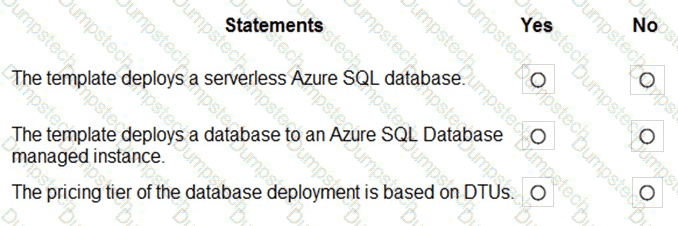
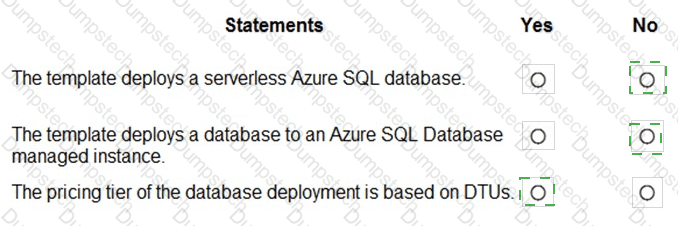
You have the following Azure Resource Manager template.

For each of the following statements, select Yes if the statement is true. Otherwise, select No.
NOTE: Each correct selection is worth one point.
You plan to move two 100-GB databases to Azure.
You need to dynamically scale resources consumption based on workloads. The solution must minimize downtime during scaling operations.
What should you use?
You have an Azure AD tenant and a logical Microsoft SQL server named SQL1 that hosts several Azure SQL databases.
You plan to assign Azure AD users permissions to the databases automatically by using Azure Automation.
You need to create the required Automation accounts.
Which two accounts should you create? Each correct answer presents part of the solution.
NOTE: Each correct selection is worth one point.
You have the following Transact-SQL query.
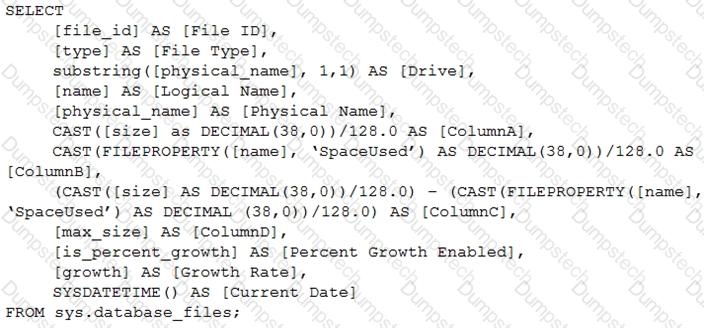
Which column returned by the query represents the free space in each file?
