
Summer Sale Limited Time 75% Discount Offer - Ends in 0d 00h 00m 00s - Coupon code = simple75

Pass the WGU Courses and Certificates Applied-Algebra Questions and answers with Dumpstech

Exam Applied-Algebra Premium Access

View all detail and faqs for the Applied-Algebra exam

Practice at least 50% of the questions to maximize your chances of passing.
Viewing page 2 out of 3 pages
Viewing questions 11-20 out of questions
Questions # 11:

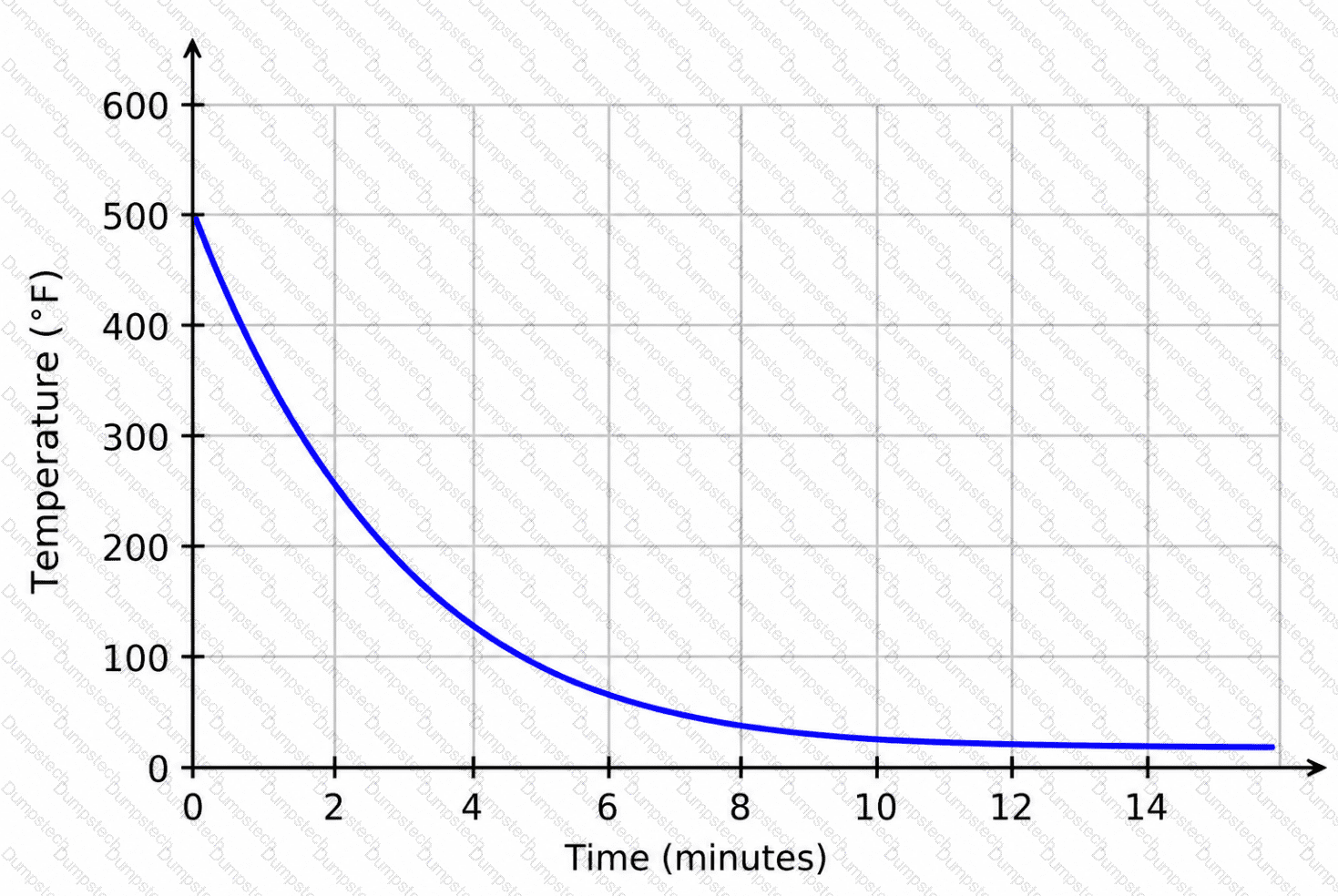
The temperature of an object changes according to the relationship in the graph.
Question # 11

Which equation represents the horizontal asymptote of the function?

Options:

A.

x=25

B.

y=25

C.

x=525

D.

y=525

Questions # 12:

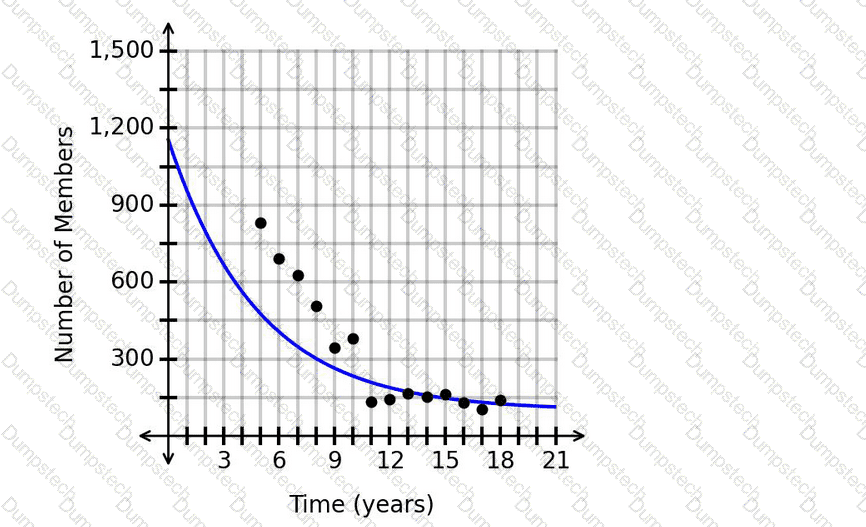
A researcher collected data on the number of members in a national association over time. The results are shown in the scatterplot. The graphed regression function has an r^2value of 0.54.
Question # 12

Is it appropriate to make a prediction for the number of members after 20.6years?

Options:

A.

No. The r^2value indicates a moderate fit, but x=20.6is more than 25%of the range beyond the maximum value.

B.

Yes. The r^2value indicates a strong fit, and x=20.6is within 50%of the range of the maximum value.

C.

Yes. The r^2value indicates a moderate fit, and x=20.6is within 25%of the range of the maximum value.

D.

No. The r^2value indicates a strong fit, but x=20.6is more than 50%of the range beyond the maximum value.

Questions # 13:

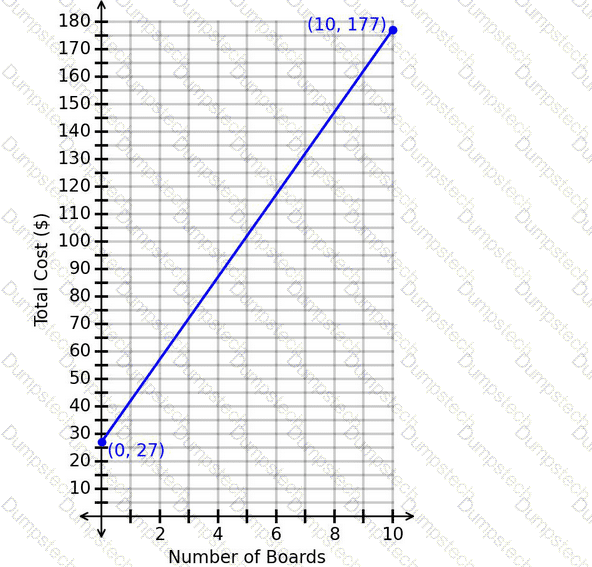
The graph shows the total cost of a lumber delivery based on the number of identical boards ordered.
Question # 13

What is the cost of each additional board?

Options:

A.

$2.70

B.

$15.00

C.

$17.70

D.

$42.00

Questions # 14:

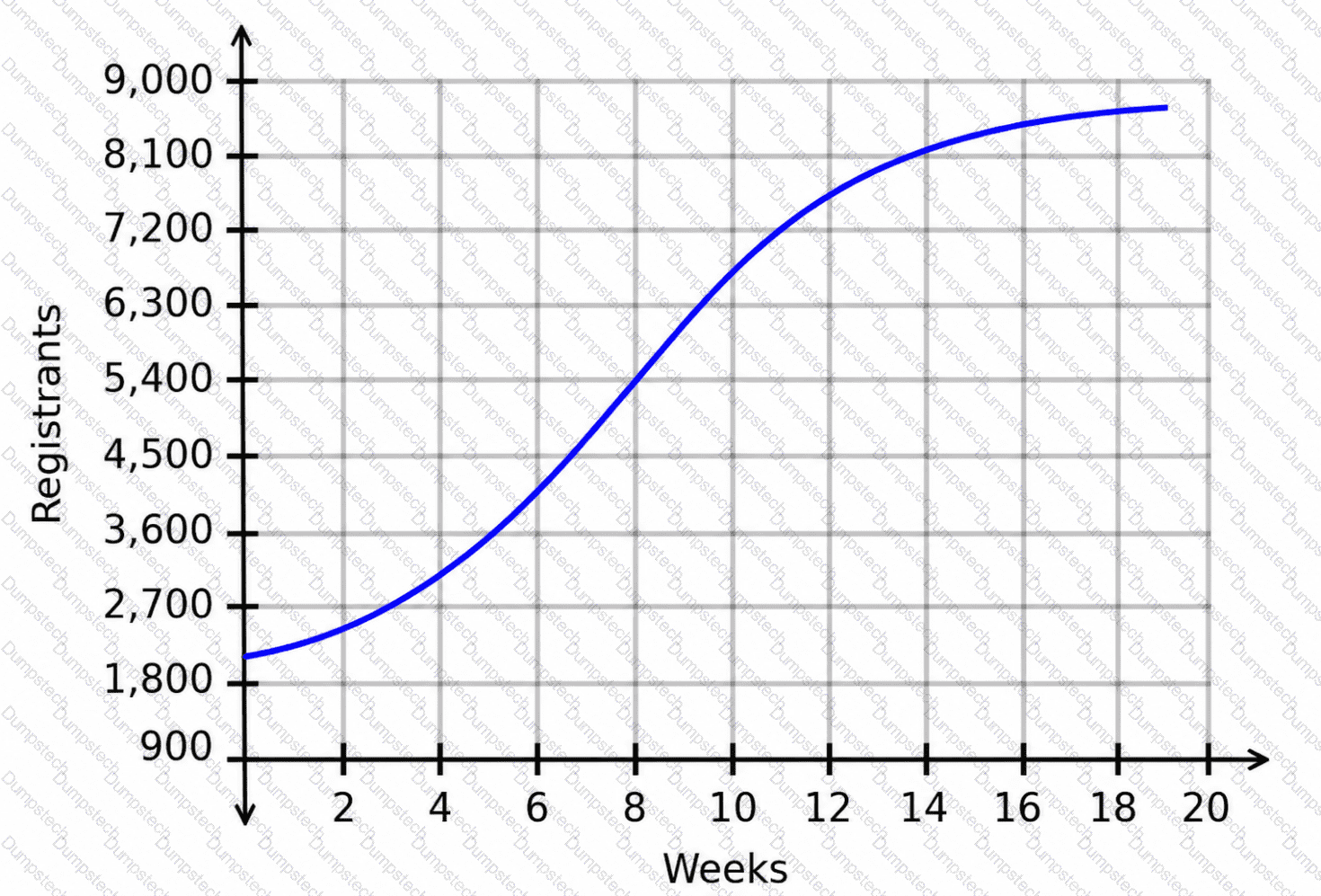
The logistic function f(x), whose graph is shown, models the number of registrants for an academic conference, where xrepresents the number of weeks since registration opened and f(x)represents the number of registrants.
Question # 14

How does the number of registrants change as time progresses from week 1 to week 7?

Options:

A.

The number of registrants decreases slower and slower.

B.

The number of registrants increases faster and faster.

C.

The number of registrants increases slower and slower.

D.

The number of registrants decreases faster and faster.

Questions # 15:

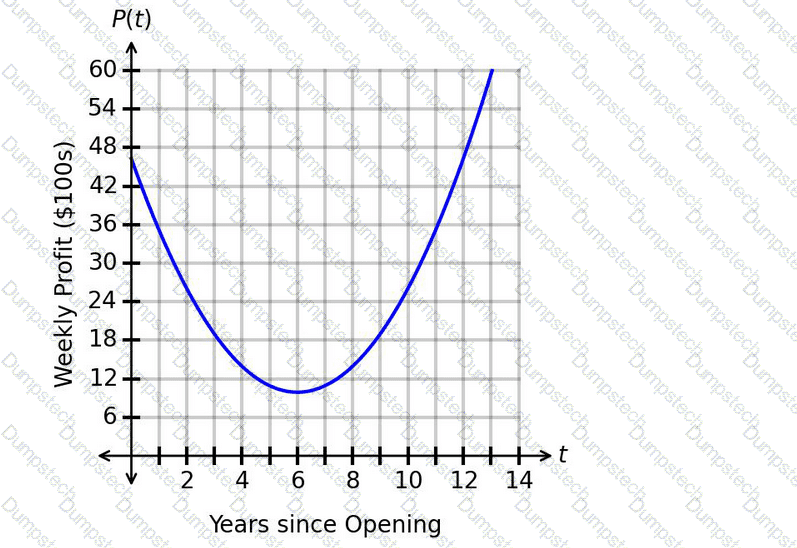
The graph shows the weekly profit in hundreds of dollars for a coffee shop. The horizontal axis represents the number of years since the coffee shop opened.
Question # 15

What is the correct interpretation of the minimum value?

Options:

A.

Approximately 6 years after opening, a minimum weekly profit of approximately $990was earned.

B.

Approximately 13 years after opening, a minimum weekly profit of approximately $990was earned.

C.

Approximately 6 years after opening, a minimum weekly profit of approximately $4,630was earned.

D.

Approximately 13 years after opening, a minimum weekly profit of approximately $4,630was earned.

Questions # 16:

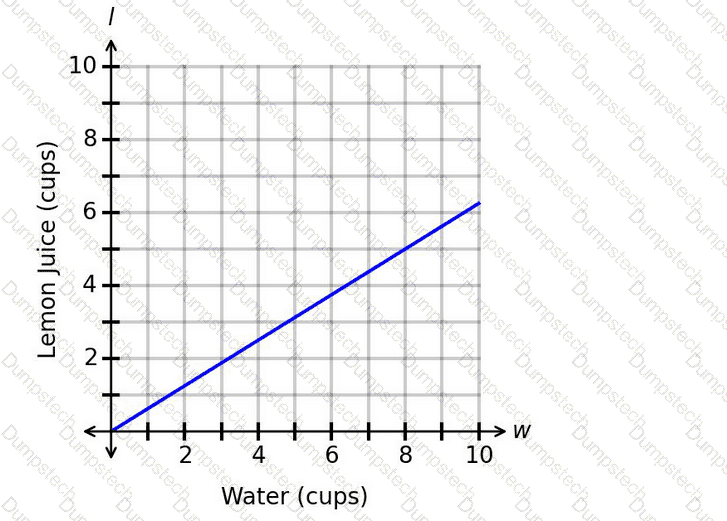
A recipe calls for a constant ratio of water and lemon juice. The graph shows the relationship between the amounts of these two ingredients, where wis the volume of water and lis the volume of lemon juice.
Question # 16

What is the correct interpretation of the rate of change?

Options:

A.

The amount of lemon juice must be the amount of water plus 5/8.

B.

The amount of lemon juice must be 8/5of the amount of water.

C.

The amount of lemon juice must be the amount of water plus 8/5.

D.

The amount of lemon juice must be 5/8of the amount of water.

Questions # 17:

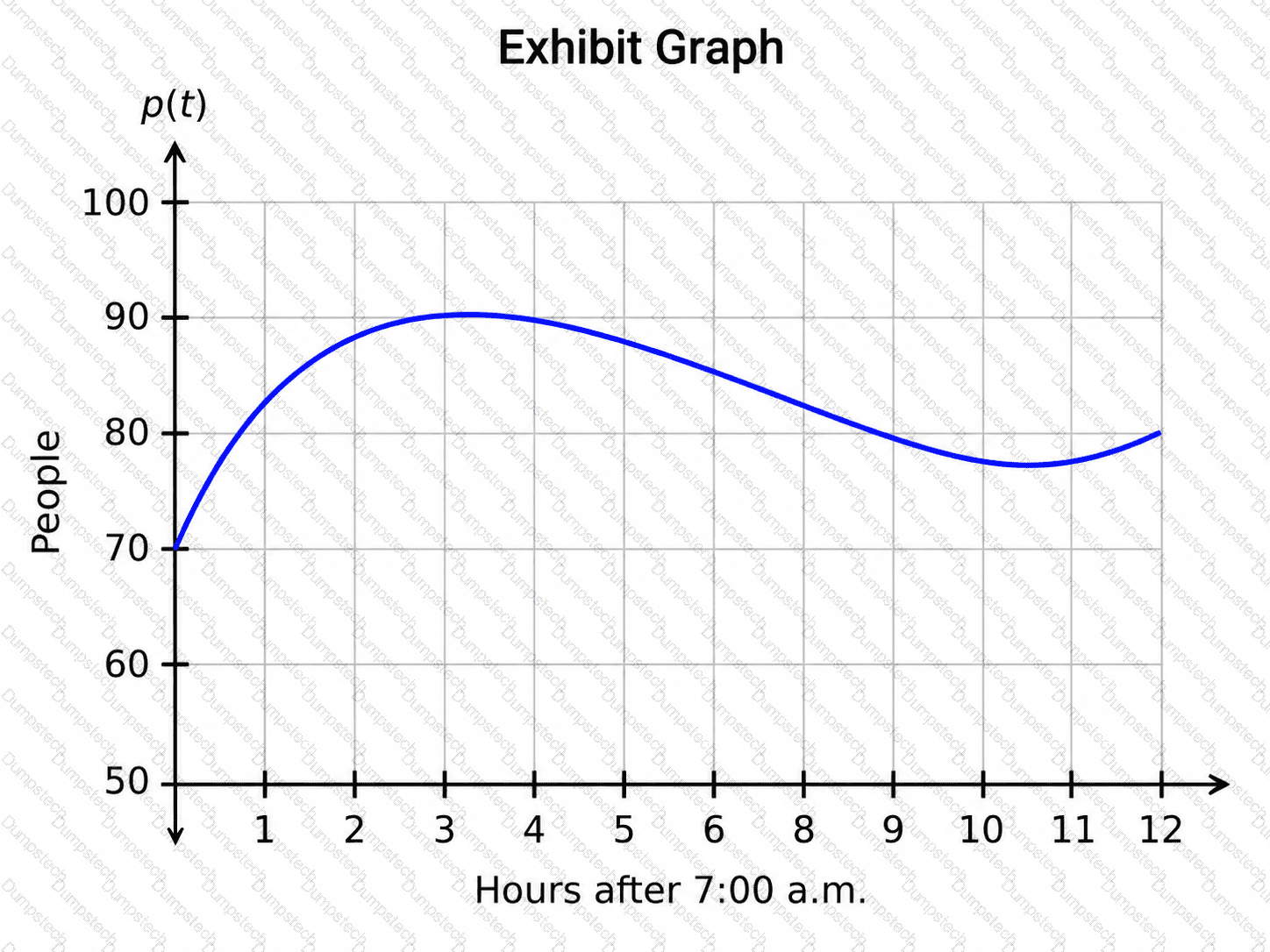
The figure shows the graph of p(t), which represents the number of people, p, at a gym thours after 7:00 a.m.
Question # 17

How should the concavity between t=1.3and t=3.4be interpreted?

Options:

A.

The number of people is increasing faster and faster.

B.

The number of people is decreasing faster and faster.

C.

The number of people is increasing slower and slower.

D.

The number of people is decreasing slower and slower.

Questions # 18:

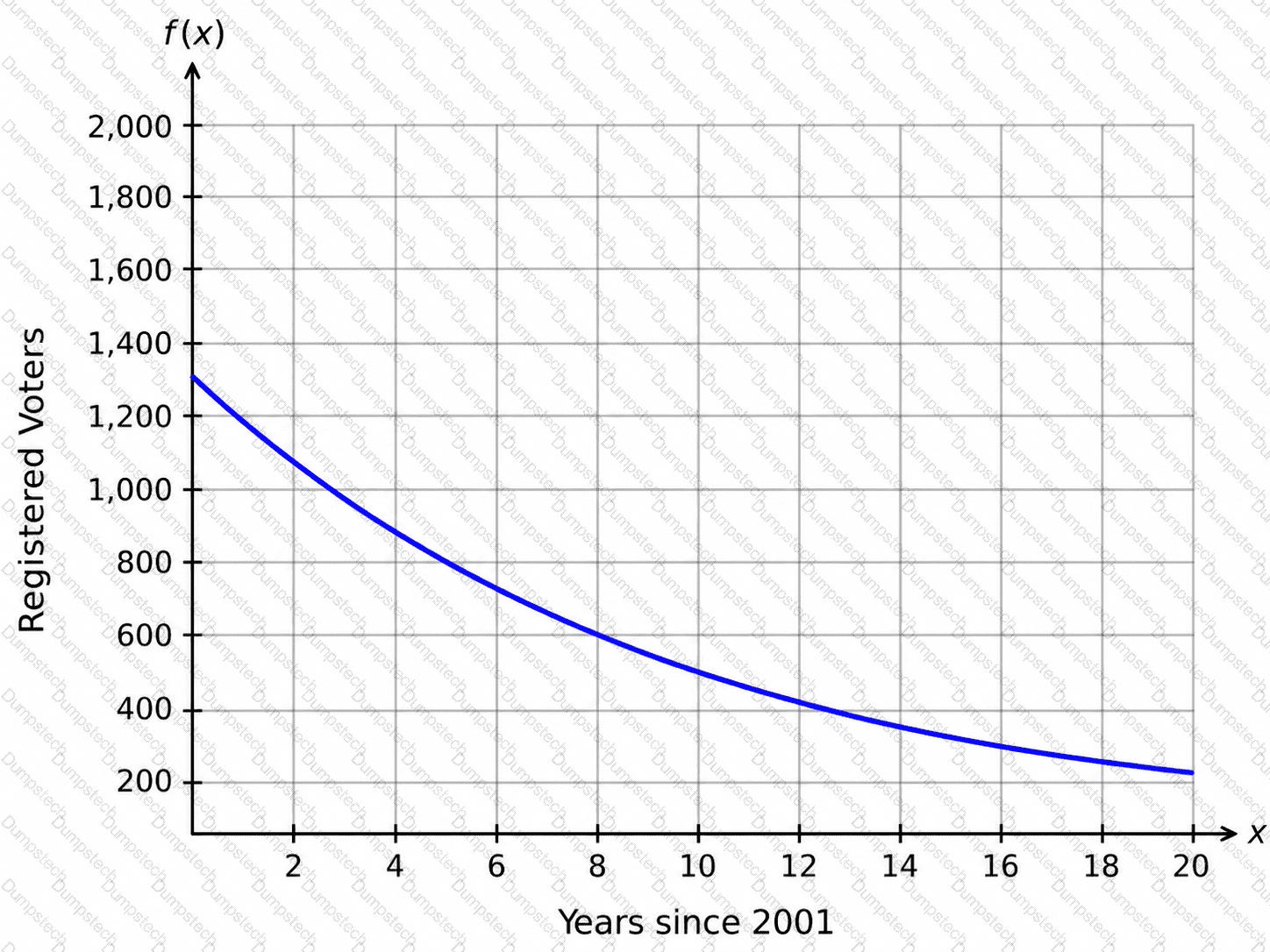
Based on collected data, the number of registered voters in a district can be modeled using the function

f(x)=1,300× 〖 0.92 〗 ^x

whose graph is shown, where xrepresents the number of years since 2001 and f(x)represents the number of registered voters.
Question # 18

Which time period has the fastest average decrease in the number of registered voters?

Options:

A.

2001 to 2007

B.

2007 to 2008

C.

2008 to 2021

D.

2009 to 2012

Questions # 19:

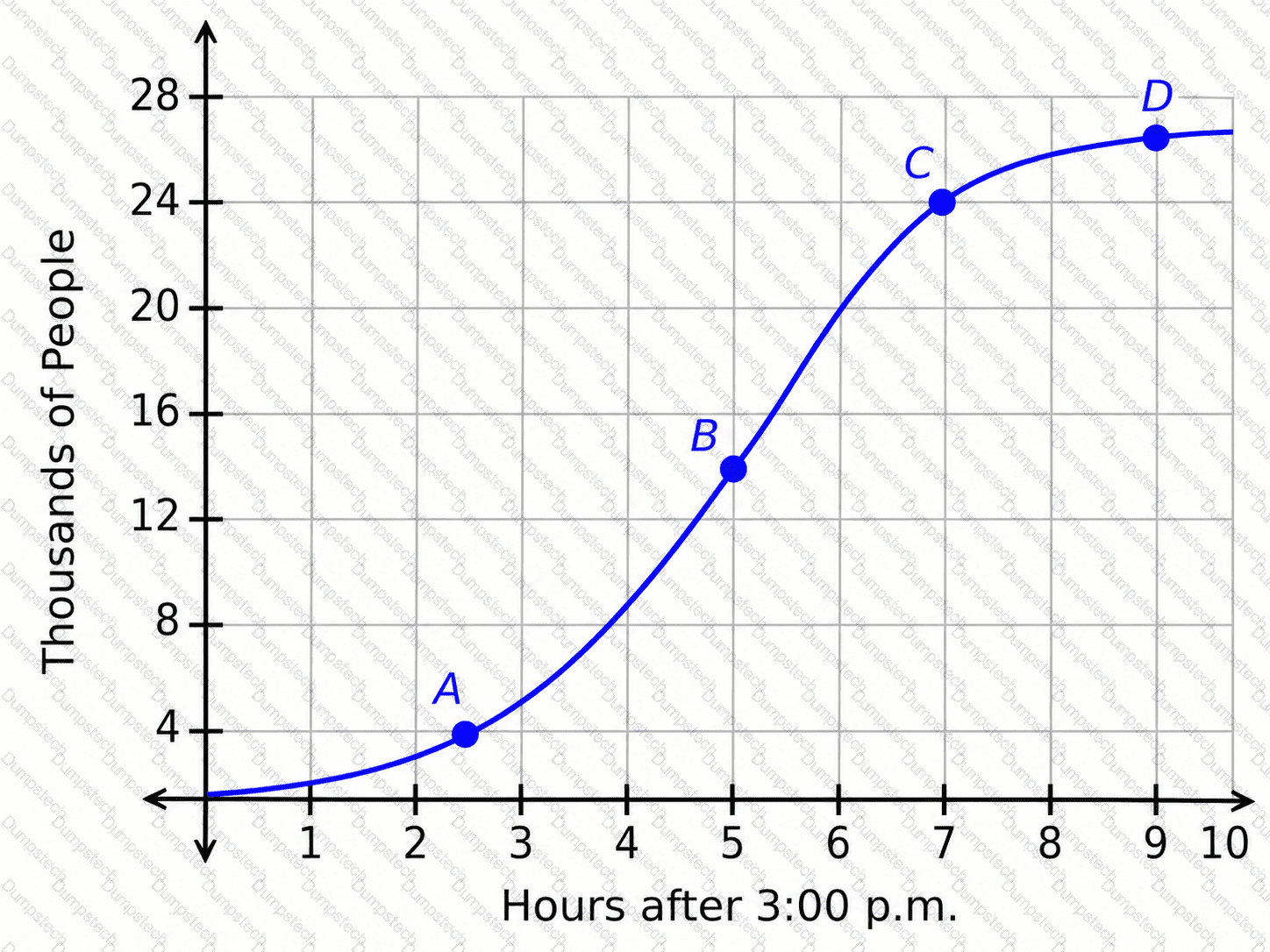
The graph shows the number of people at an event venue after 3:00 p.m., in thousands.

Which rate of change is the greatest?
Question # 19

Options:

A.

The instantaneous rate of change at point D

B.

The average rate of change from point A to point C

C.

The average rate of change from point C to point D

D.

The instantaneous rate of change at point C

Questions # 20:

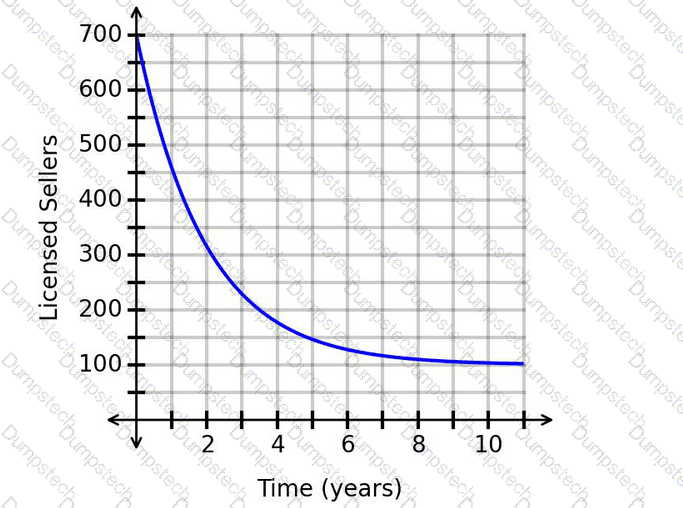
As regulations change, the number of licensed sellers of a product decreases. The graph models the change in the number of licensed sellers over time.
Question # 20

What does the horizontal asymptote mean?

Options:

A.

Over time, the number of licensed sellers will increase back up to 700.

B.

The number of licensed sellers was initially 700.

C.

In the long run, the number of licensed sellers nears 100.

D.

After 11 months, the number of licensed sellers decreased to 100.

Viewing page 2 out of 3 pages
Viewing questions 11-20 out of questions