
75only - Ends in 0d 00h 00m 00s - Coupon code = 75only
Pass the WGU Courses and Certificates Applied-Algebra Questions and answers with Dumpstech
The number of tasks completed by computer B is 12 more than the number of tasks completed by computer A. Let F(x)represent the relationship between the number of tasks completed by the two computers, where xis the number of tasks completed by computer A and Fis the number of tasks completed by computer B.
Which function represents this situation?
The number of members of a religious organization can be modeled using the logistic function f(x), where xrepresents the number of years since the organization was started and f(x)represents the number of members. The graph of f(x)is shown.
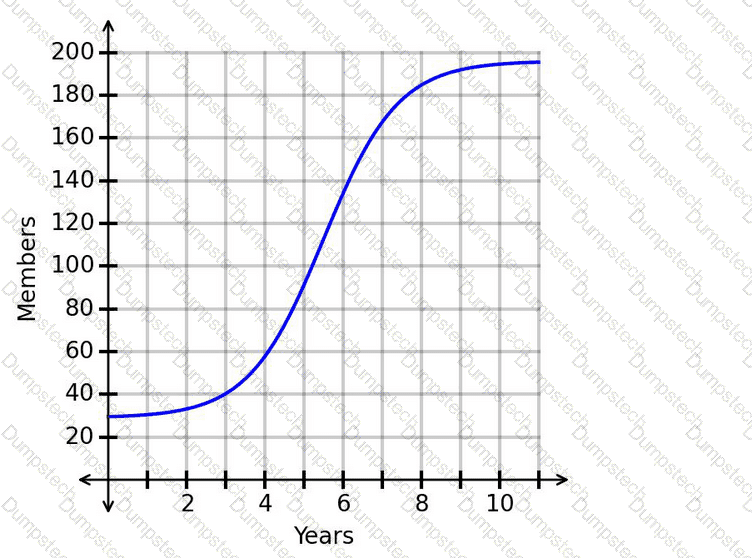
What is one range of values for which the graph is concave down?
A new company just launched and is using the function M(t)to predict its market share after tyears. The graph of M(t)is shown.
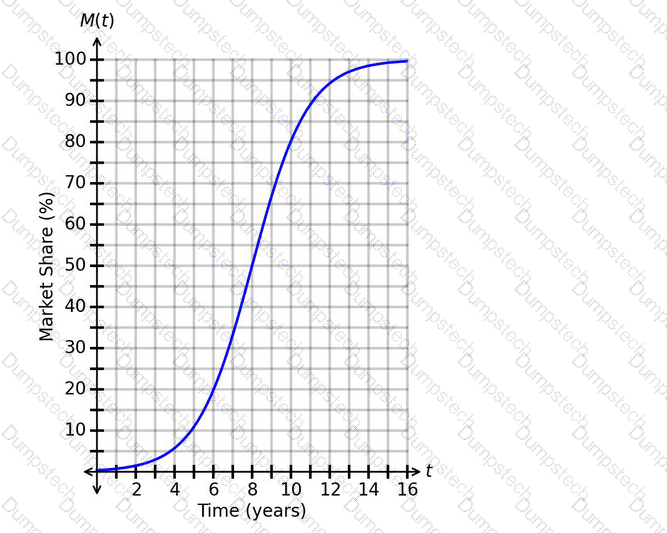
When should the company expect to have a market share of 40%?
Consider the graph of p(t)shown. The function represents the number of active players, p, in a game thours after 11:00 a.m.
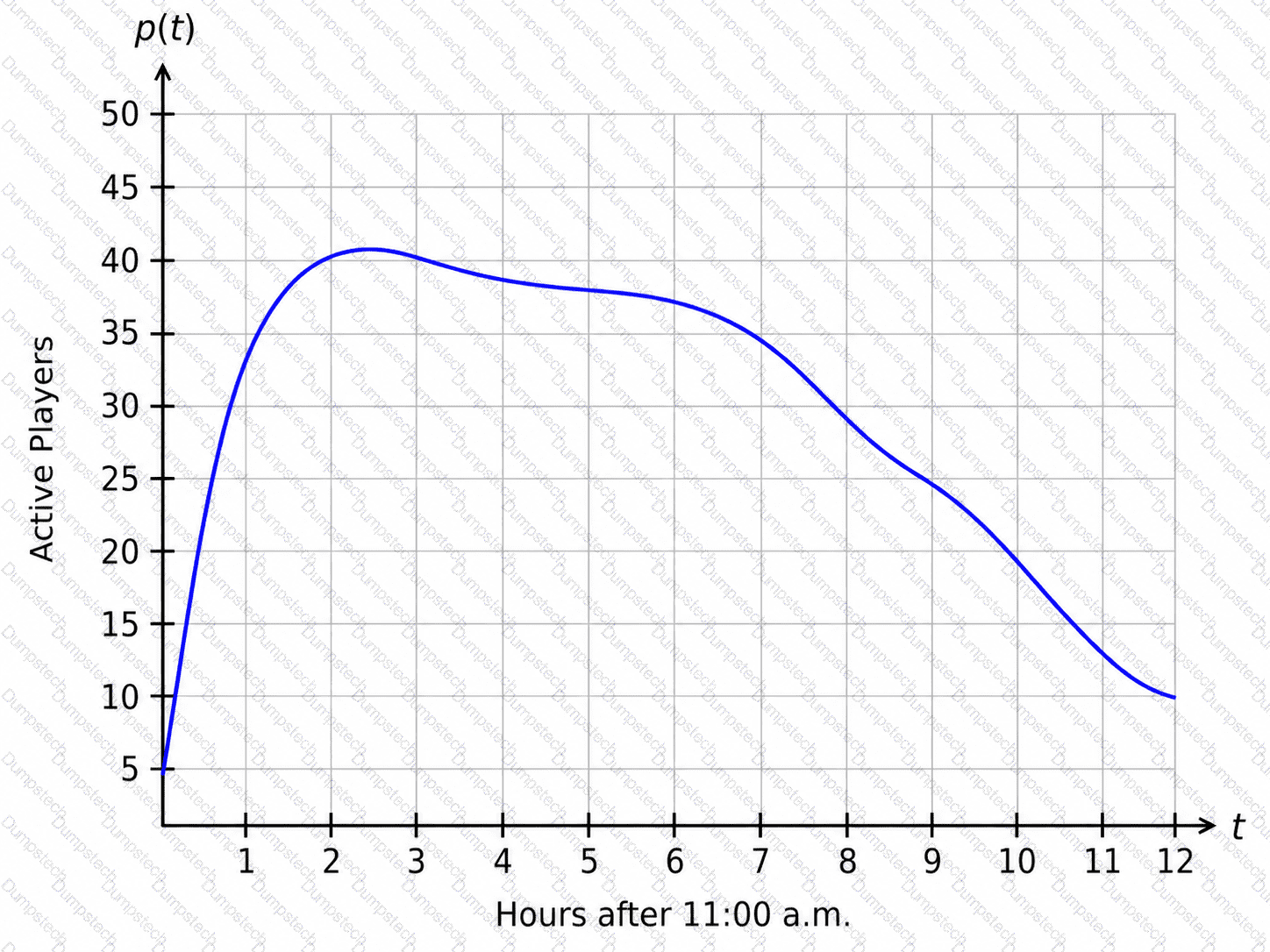
Which interpretation of the concavity between t=0.4and t=3.6is correct?
A team was assembled at a manufacturing plant in order to boost productivity. The team was tasked with producing as many widgets each day as possible. The results are shown in the graph.
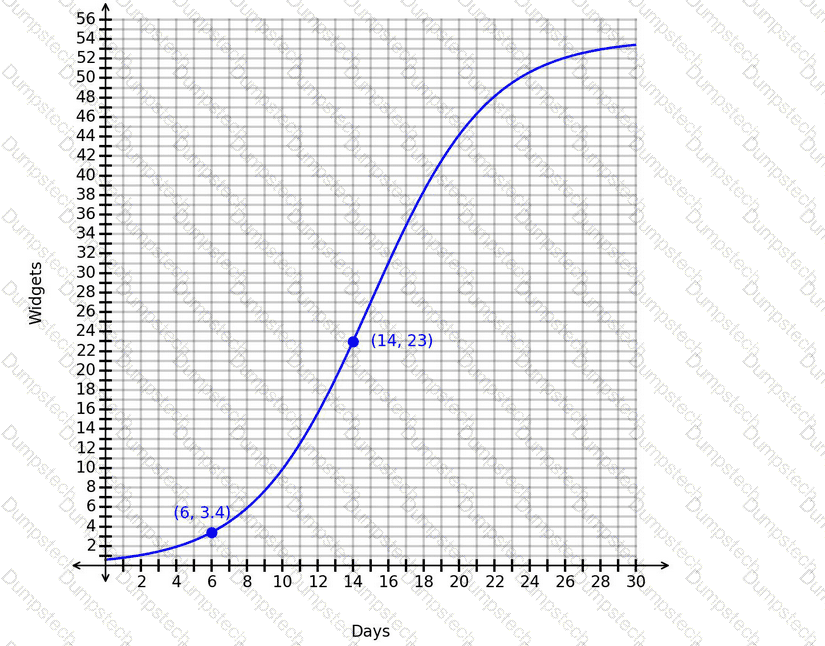
What is the correct interpretation of the average rate of change from day 6 to day 14?
The graph shows the number of customers visiting a bookstore, where the number of days since the beginning of the month is along the horizontal axis and the number of customers visiting the bookstore each day is along the vertical axis. More customers show up to the store on days when new releases are featured than on other days.
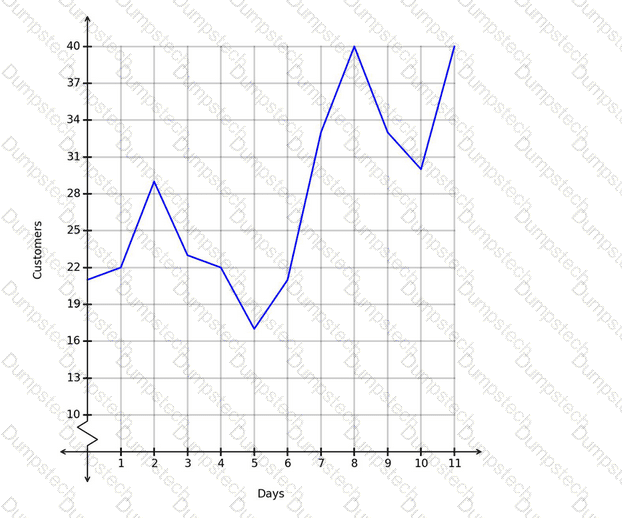
Which days likely featured new releases?
The graph shows the number of user accounts on a social media website over time.
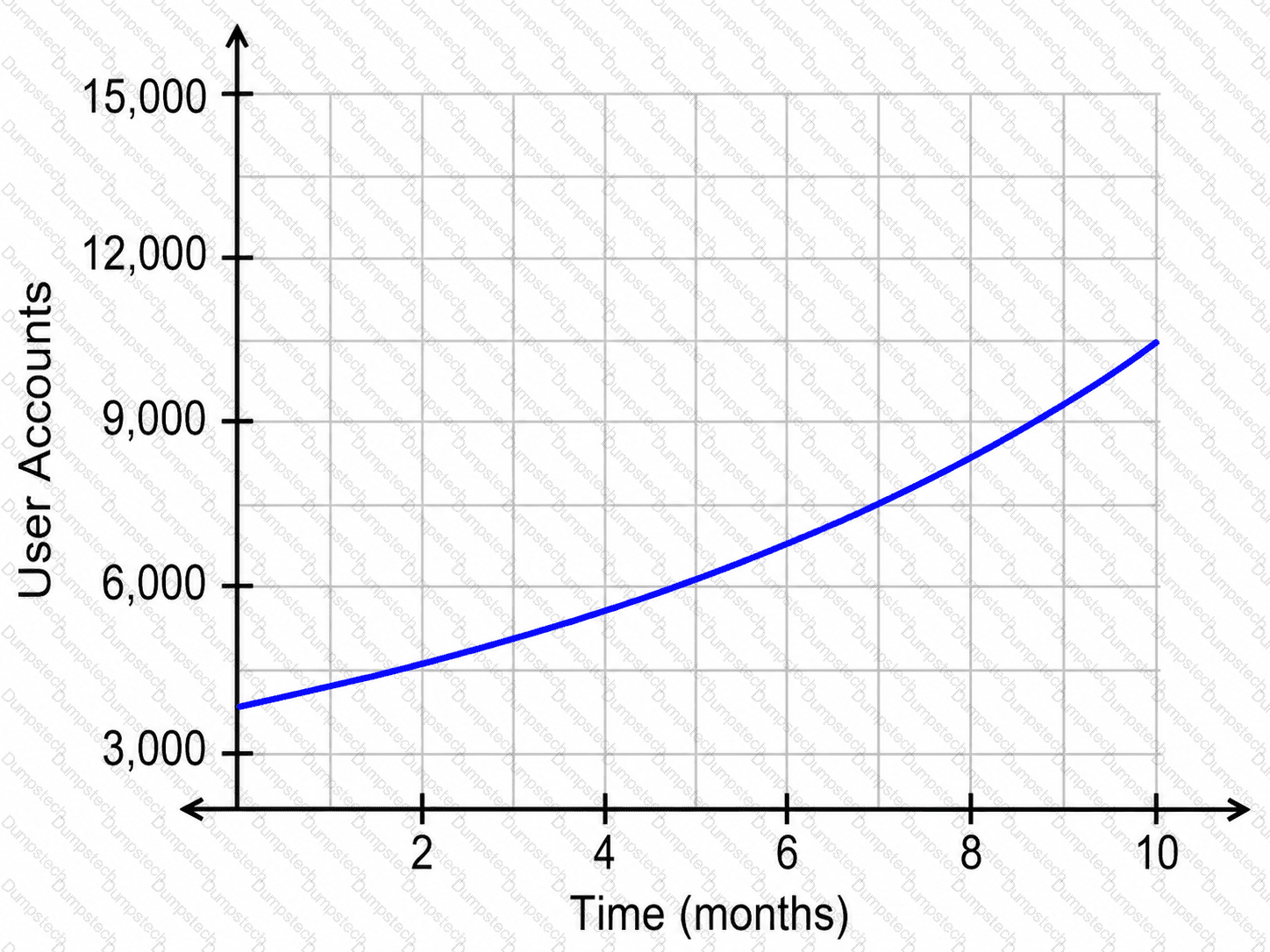
When did the number of user accounts reach 4,500?
The number of acres affected by an invasive species can be modeled using the logistic function f(x), where xrepresents the number of months since the species was introduced and f(x)represents the number of affected acres. The graph of f(x)is shown.
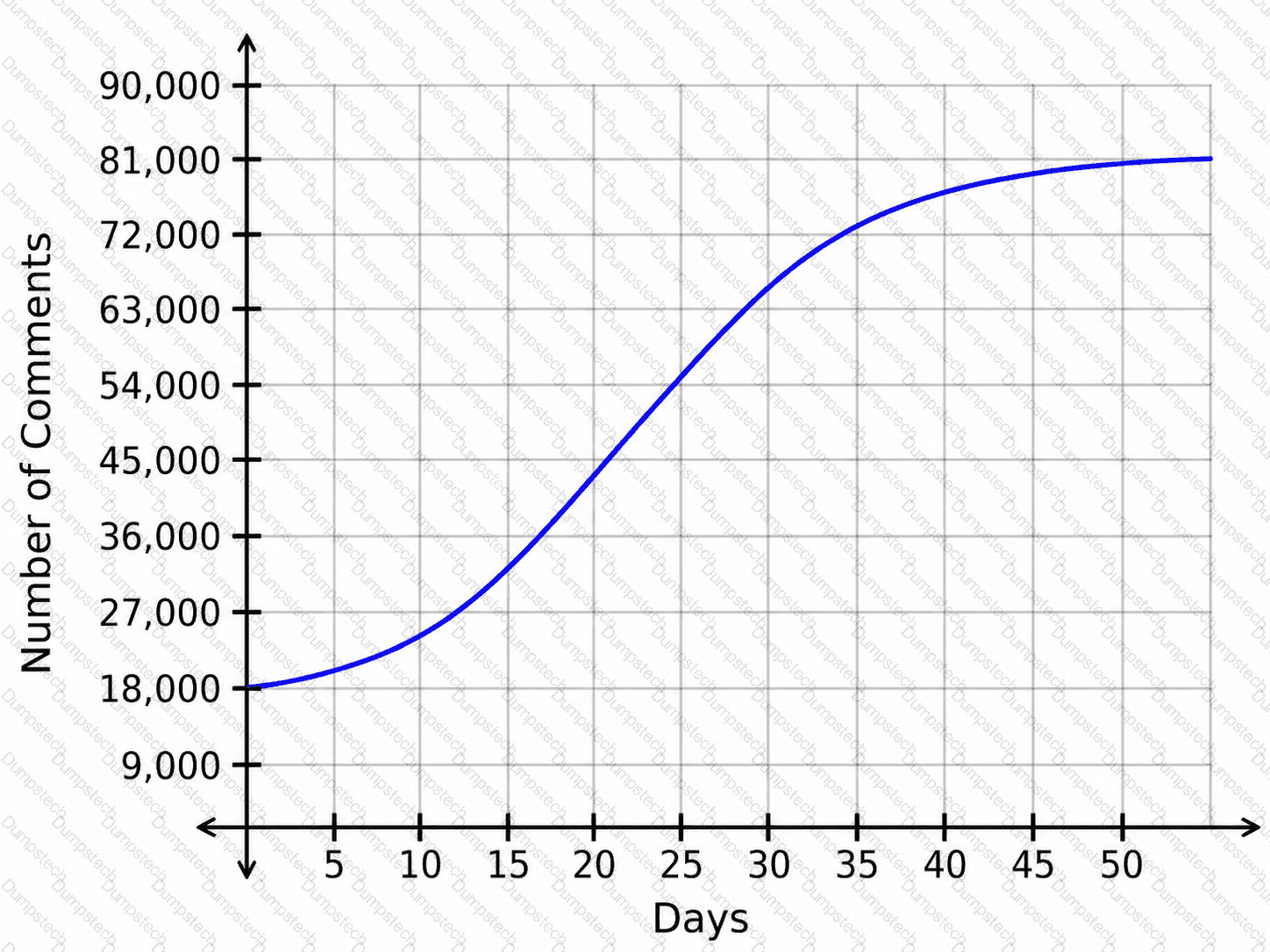
What happens as time progresses from month 2 to month 6?
The function d(x)=14+65xrepresents the distance, in meters, from a tower to an object at time x, in seconds.
What is the value of d(1.5)?
The scatterplot shows data on the number of visitors to a resort each week since opening. A regression function is graphed with r^2=0.99. The predicted number of visitors after 16.4weeks is 38.6.
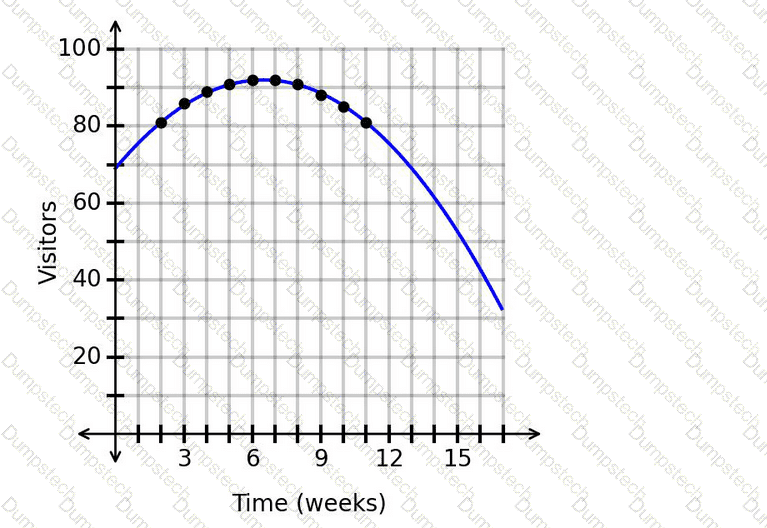
Is this prediction appropriate?
